HAIRCUT IDEAS
Shag Haircuts for Thin Hair: Layers That Create Fullness
Thin hair doesn’t need more hair — it needs smarter hair. The shag is the one cut that manufactures volume instead of begging for it. Here’s how to get the fullness without the bulk.
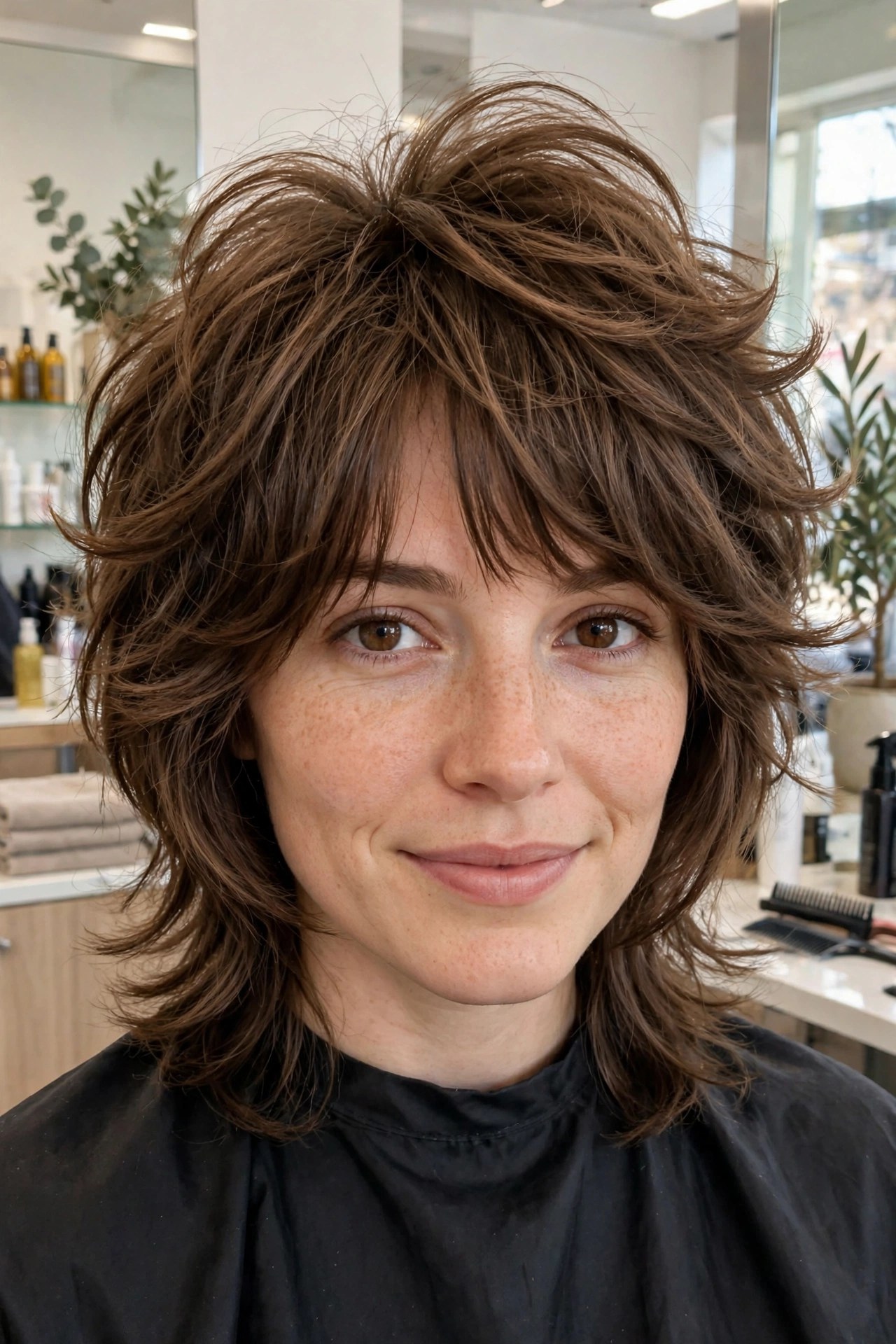
If your hair is thin, you’ve heard the bad advice a hundred times: don’t layer it, you’ll have nothing left. Ignore that. What actually makes thin hair look thin is weight — one long, heavy sheet of hair pulling itself flat. The shag does the opposite: it removes weight strategically, so what remains springs up, separates, and reads as twice as much hair.
This isn’t a 70s costume. The 2026 shag is soft, wearable, and laser-targeted at fine hair. It comes in bob, medium, and curtain-bang versions — and every one of them is built on the same trick: layers that create fullness from nothing.
1. Why the Shag Is the Volume King for Thin Hair
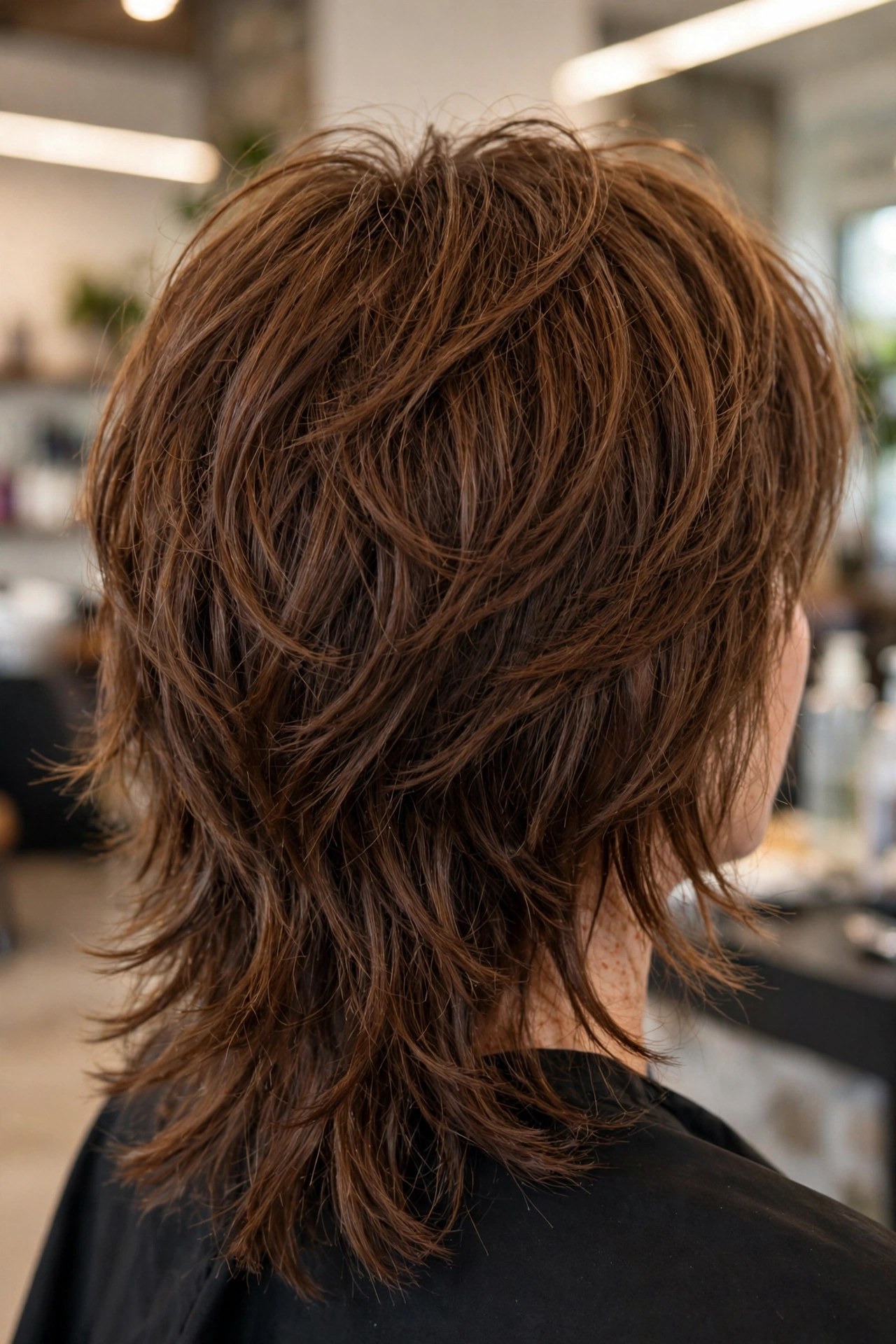
Here’s the physics, minus the jargon: when hair is one length, the bottom weighs down the top — flat roots, stringy ends. A shag cuts the hair shorter through the crown and upper layers, so the top hairs are literally too short to be dragged down. They bounce. Those bouncy short layers then stack over the longer pieces, and your eye reads the stack as density.
The other secret is texture. Wispy, piecey ends look airy — and airy reads as full while heavy, solid ends read as lanky. The shag trades a blunt, solid perimeter for feathered, broken-up ends that move. Movement is the oldest illusion in hairdressing: still hair looks thin, moving hair looks thick.
Best for: fine, straight to wavy hair that falls flat within an hour of styling. Skip it if: your hair is very curly and very short — the shrinkage plus the layers can go round fast. (Longer shags handle curls beautifully.)
2. The Shaggy Bob: Short, Feathered, and Full

The shaggy bob is the shortest way into the shag world — chin to jaw length, with layers feathered through the top and texture sliced into the ends. For thin hair, this length is a cheat code: short hair is light, light hair lifts, and the shag’s layers make sure the lift happens everywhere, not just at the crown.
Ask for the perimeter to land right at the jawline and the shortest layers to start high at the crown. The result is a rounded, airy shape — no triangle, no bulk, just soft fullness that looks deliberately undone.
Styling time: 5–8 minutes. Blow-dry the crown upward with fingers (skip the round brush — too polished kills the shag), pinch a pea-sized bit of texturizing cream through the ends, and let it be imperfect. Upkeep: trims every 6–8 weeks.
3. The Medium Shag: The Most-Requested Version

This is the cut your stylist is already doing on repeat: collarbone length, layers starting at the cheekbones, curtain fringe optional but recommended. For thin hair it’s the sweet spot — long enough to feel like “real hair,” short enough in the upper layers to keep real lift at the roots.
Why it beats plain long layers: in a standard layered cut, the layers are long and sit quietly against the body of the hair. A shag’s layers are shorter and choppier, so they separate and create visible volume instead of just blending. It’s the difference between hair that lies and hair that lives.
Styling time: 10 minutes — mousse at the roots, rough-dry upside down, then a 2-minute pass with a round brush on the curtain pieces. Upkeep: trims every 8–10 weeks; shags grow out more gracefully than blunt cuts.
4. Curtain Bangs + Shag: The Fullness Combo

If you want ONE move that makes thin hair look instantly thicker, it’s this: curtain bangs flowing into shag layers. The fringe adds a curtain of short hair around the face, the face-framing layers add a second curtain, and suddenly the front of your head has three times the visible density — which is what everyone actually sees.
Curtain bangs work on thin hair where blunt bangs fail. A blunt fringe on fine hair looks sparse; a wispy, parted curtain fringe looks intentional and airy. It also draws the eye up and out — widening the face frame instead of letting hair hang in one thin sheet past the shoulders.
Styling time: 3 extra minutes. Blow-dry the fringe with a round brush, rolling away from the face on each side. A velcro roller in each curtain piece while you do your makeup sets it for the whole day. Upkeep: fringe trims every 4–5 weeks (your stylist usually does these free).
5. The Soft Wolf Shag: Edgier, Still Wearable

The wolf cut is the shag’s bolder cousin — shorter, choppier layers on top melting into longer length below. On thin hair, a softened version is magic: the extreme layering creates maximum separation, and separation is exactly what makes fine hair look abundant.
The key word is soft. Tell your stylist you want the wolf’s texture without the mullet’s drama — blended, face-framing layers, no harsh disconnect between the short top and the long bottom. On thin hair this keeps the look modern rather than spiky.
Styling time: 8 minutes. Sea-salt spray on damp hair, scrunch, diffuse or rough-dry. This cut rewards messiness — the less perfect, the fuller it looks. Upkeep: trims every 8–10 weeks.
6. What to Ask For at the Salon (Word for Word)
Thin hair gets butchered by vague requests, so walk in with these:
For any shag: “I want a shag with the shortest layers starting at the crown, feathered ends, and no blunt perimeter. My hair is thin, so keep the ends wispy but not see-through — I need the texture, not the thinning.”
For the shaggy bob: “Chin-length shaggy bob, layers feathered through the top, texture sliced into the ends, keep the outline soft around the jaw.”
For the medium shag: “Collarbone length, layers starting at the cheekbones, choppy but blended, and curtain bangs that melt into the face frame.”
Bring photos of thin-haired women wearing the cut — a shag on thick hair looks completely different, and photos keep your stylist honest about the translation. And ask for a dry finish check: shags should be refined on dry hair so the stylist can see exactly how each layer falls.
7. The 10-Minute Volume Routine

A shag on thin hair with zero styling still beats a blunt cut — but ten minutes turns it into a transformation. Here’s the routine stylists give their fine-haired clients:
- 1. Mousse, roots only. A golf-ball of volumizing mousse massaged into damp roots. Never the ends — thin ends plus product equals stringy.
- 2. Rough-dry upside down. Flip your head and dry to 80% with fingers. This sets the crown lift before the layers get locked into place.
- 3. Curtain pieces with a round brush. Two minutes: roll the face-framing layers away from your face for that swoosh.
- 4. Texturizing cream, pea-sized. Warm it between palms, pinch the ends. This separates the layers so they read as pieces instead of one sheet.
- 5. Dry shampoo on day two. At the roots only. It absorbs oil (oil is thin hair’s worst enemy) and adds grit that props the layers up.
What to skip: heavy oils, silicone serums on the roots, and flat-ironing the whole head. Each one glues your carefully built layers back together.
8. Shag vs the Alternatives: The Thin-Hair Scorecard
| Shag | Blunt Lob | Long Layers | |
|---|---|---|---|
| Volume at the crown | Excellent — short top layers bounce | Poor — weight pulls it flat | Moderate — long layers sit quietly |
| Movement | Maximum — every layer separates | Minimal — one solid sheet | Some — mostly at the ends |
| Daily styling | 5–10 min, rewards messiness | 10–15 min to avoid flatness | 10–15 min, needs hot tools |
| Grow-out | Graceful — layers just get longer | Obvious — the line grows out | Easy — but stays flat |
| Best for | Fine hair that falls flat | Thick hair (holds the line) | Thin hair worn long anyway |
| Risk | Over-thinning by a bad stylist | Stringy, lank look on fine hair | Can look dated and heavy |
The blunt lob is the cut thin-haired women default to — and it’s the worst choice for fullness. A one-length perimeter has nothing to hold it up. If you love the lob, make it a shaggy lob: same length, shag interior.
Frequently Asked Questions
Won’t layers make my thin hair look thinner?
Only bad layers do — the kind where the stylist thins out the ends until they’re see-through. A proper shag keeps the ends wispy but substantial and concentrates the layering at the crown and face frame. Tell your stylist “texture, not thinning” and you’ll get fullness, not wisps.
How short should the top layers be?
For real lift, the shortest crown layers should sit around 3–5 inches — short enough to bounce instead of being dragged down. Your stylist will adjust for your head shape and how your hair falls, but if the top layers are longer than your chin, it’s not a shag, it’s just layers.
Can thin, fine hair handle curtain bangs?
Yes — curtain bangs are one of the few fringes that genuinely suit thin hair. Because they’re parted and wispy rather than blunt, they never look sparse; they frame the face and multiply visible density at the front. Avoid heavy blunt bangs, which can expose a thin hairline.
How often does a shag need trimming?
Every 8–10 weeks for medium and long shags; every 6–8 for the shaggy bob. The good news: shags grow out far more gracefully than blunt cuts, because layers just get longer instead of losing a line. Curtain fringe needs its own trim every 4–5 weeks.
Is the shag good for wavy thin hair?
It’s arguably the best cut for it. Waves plus shag layers create natural separation and volume with almost no styling — scrunch in some salt spray and go. Straight fine hair needs the blow-dry routine; wavy fine hair practically styles itself.
What products should I avoid?
Heavy oils, silicone-heavy serums, and creamy leave-ins on the roots — they coat fine hair and collapse the layers. Stick to mousse, salt spray, and dry shampoo: lightweight products that add grip instead of weight.
Thin hair isn’t a problem to hide — it’s a canvas for the right cut. Screenshot the version that made you lean in, show your stylist, and say the words: texture, not thinning. The fullness was there all along; the shag just lets it out.