HAIRCUT IDEAS
Thin Hair, Big Style: Shag Cuts That Add Body
The shag is basically a cheat code for fine hair — choppy layers, feathered ends, and movement exactly where flat hair needs it most. Here are 7 shag cuts that make thin hair look like it has twice the density.
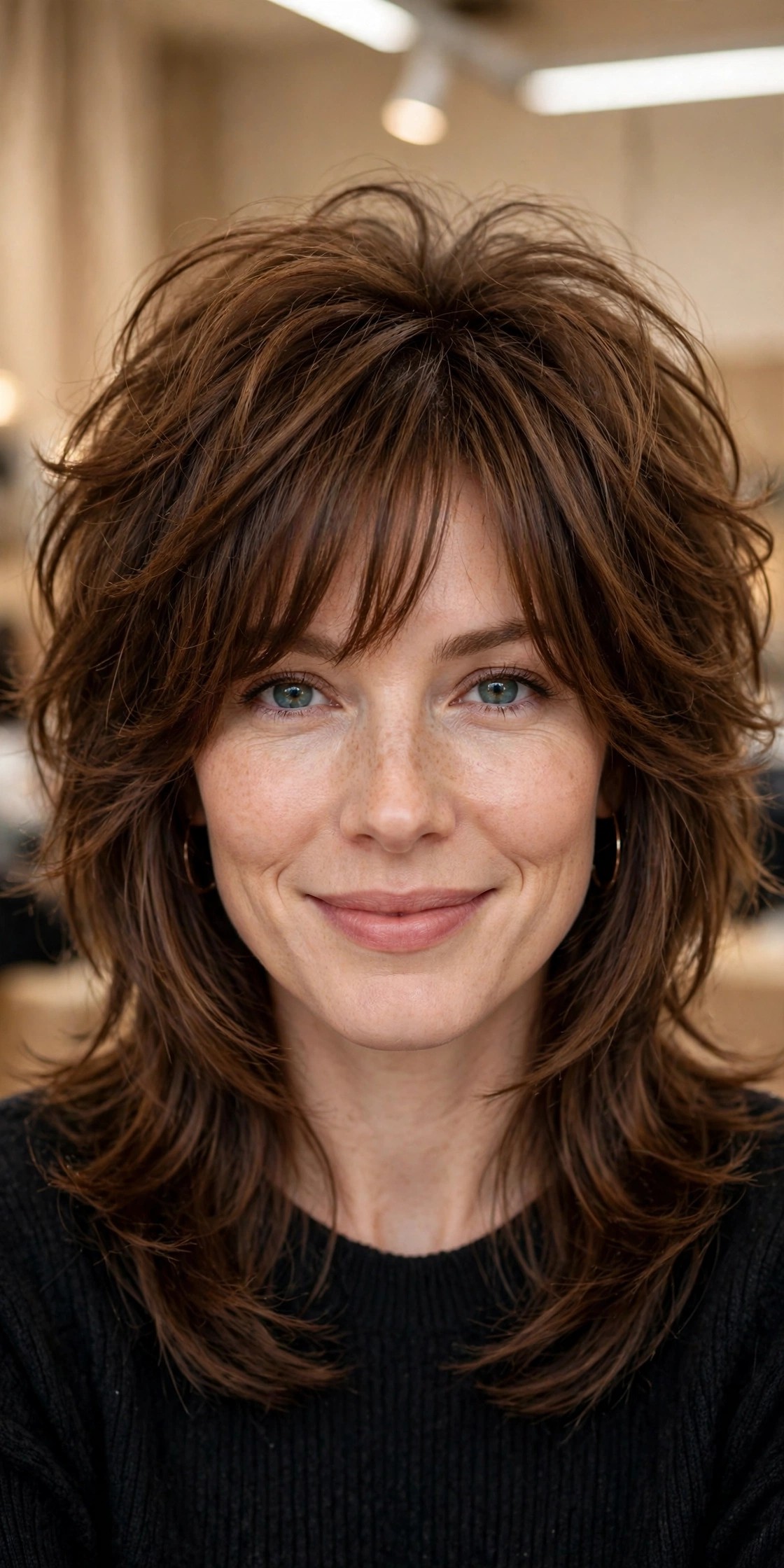
If your hair is fine, you already know the struggle: cuts that look full on the salon model fall flat on you by noon. The shag is the rare exception. It was built for texture — removing weight where hair drags and building volume where it collapses. The secret is how the layers are cut: short, choppy, and feathered through the crown, so every strand has somewhere to go instead of plastering to your scalp.
Below are seven shag variations that actually deliver on thin hair — with exactly what to ask your stylist for, how long styling takes, and who each cut flatters most.
1. The Curtain-Bang Shag
This is the shag’s greatest hit for fine hair, and there’s a reason it keeps going viral. Curtain bangs sweep open at the forehead, exposing the crown layers underneath — which means the thickest-looking part of your head is front and center. The bangs also break up a flat hairline, so the top of your head reads as fuller even on day-three hair.
What to ask for: “A shoulder-length shag with curtain bangs that part in the middle and hit at the cheekbone. Keep the crown layers short and choppy — I want lift at the top.” Ask for feathering, not blunt ends; blunt tips on fine hair look stringy.
Styling: 5 minutes. Blow-dry the bangs with a round brush, rolling them away from your face. Scrunch the rest with a dime-size of mousse while damp, then let it air dry or diffuse on low. Done.
Who it suits: Round and heart-shaped faces especially — the swept-open bangs slim the cheeks. Works on straight to wavy hair; curls need a longer bang version.
2. The Collarbone Choppy Shag
Want to keep length? This is your cut. The collarbone shag keeps the perimeter long while the interior is carved with choppy layers — so you keep your ponytail length but gain all the body. The trick for thin hair: the ends are flipped and feathered instead of thinned. Thinning shears are the enemy of fine hair; feathering with a razor or point-cutting gives movement without removing density.
What to ask for: “Collarbone length in the back, with choppy interior layers starting at the cheekbone. Feathered ends, no thinning shears.” Bring a photo — this cut lives or dies on layer placement.
Styling: 7–10 minutes. Flip the ends out with a flat iron (just the last two inches), then rake through with texturizing spray. The flipped tips create the illusion of thickness — a visual trick where the ends fan wider than the roots.
Who it suits: Everyone, honestly. Oval and long faces benefit most because the width at the collarbone balances a longer face shape.
3. The Short Flippy Shag
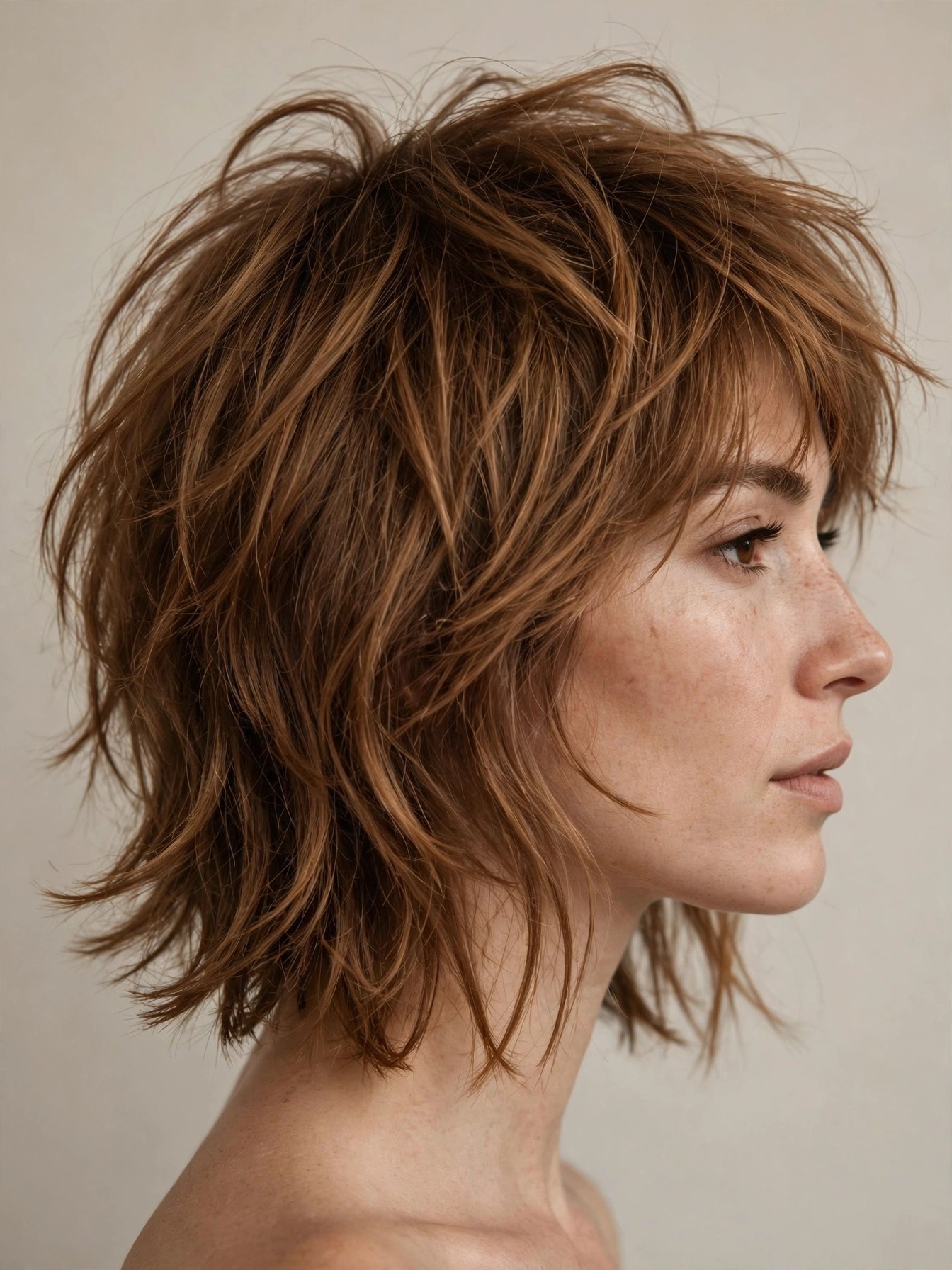
Short is the bravest — and often the most rewarding — move for fine hair. When the longest layer sits at the chin, there’s simply less weight pulling everything down, and every layer pushes outward instead of hanging. The “flippy” part comes from layers that turn out at the tips, which reads as bounce and body even when your hair is air-dried.
What to ask for: “A chin-length shaggy bob with lots of short crown layers and flipped ends. I want it piecy, not polished.” Short crown layers are non-negotiable — without them, a chin-length cut on fine hair goes flat by lunch.
Styling: 3 minutes, seriously. A little mousse on damp hair, flip your head upside down for the blow-dry, done. This is the lowest-effort cut on the list.
Who it suits: Petite faces and narrow jawlines — the outward flip adds width where fine hair usually goes limp. If you have a strong jaw, ask for the pieces to start below the chin.

4. The Soft Wolf Shag
The wolf cut got a reputation for being edgy, but the “soft” version is just a shag with a longer back and a shorter crown — and it’s a volume machine for thin hair. The top is stacked with short layers that build a halo of fullness, while the length in back keeps it feminine and versatile. Think of it as the shag’s cooler cousin that does all the heavy lifting up top.
What to ask for: “A soft wolf cut — heavy short layers through the crown, keeping the length long in back. Connective, blended, not disconnected.” Show your stylist the difference between a mullet-ish wolf and a blended one.
Styling: 5–8 minutes. The crown is the whole point, so rough-dry upside down, then smooth only the bottom length. A pinch of texture paste at the crown roots adds staying power.
Who it suits: Thick-at-the-roots-but-fine-at-the-ends hair types, and anyone whose hair goes flat on top. Round faces should keep the crown layers slightly longer.
5. The Fringe-First Shag
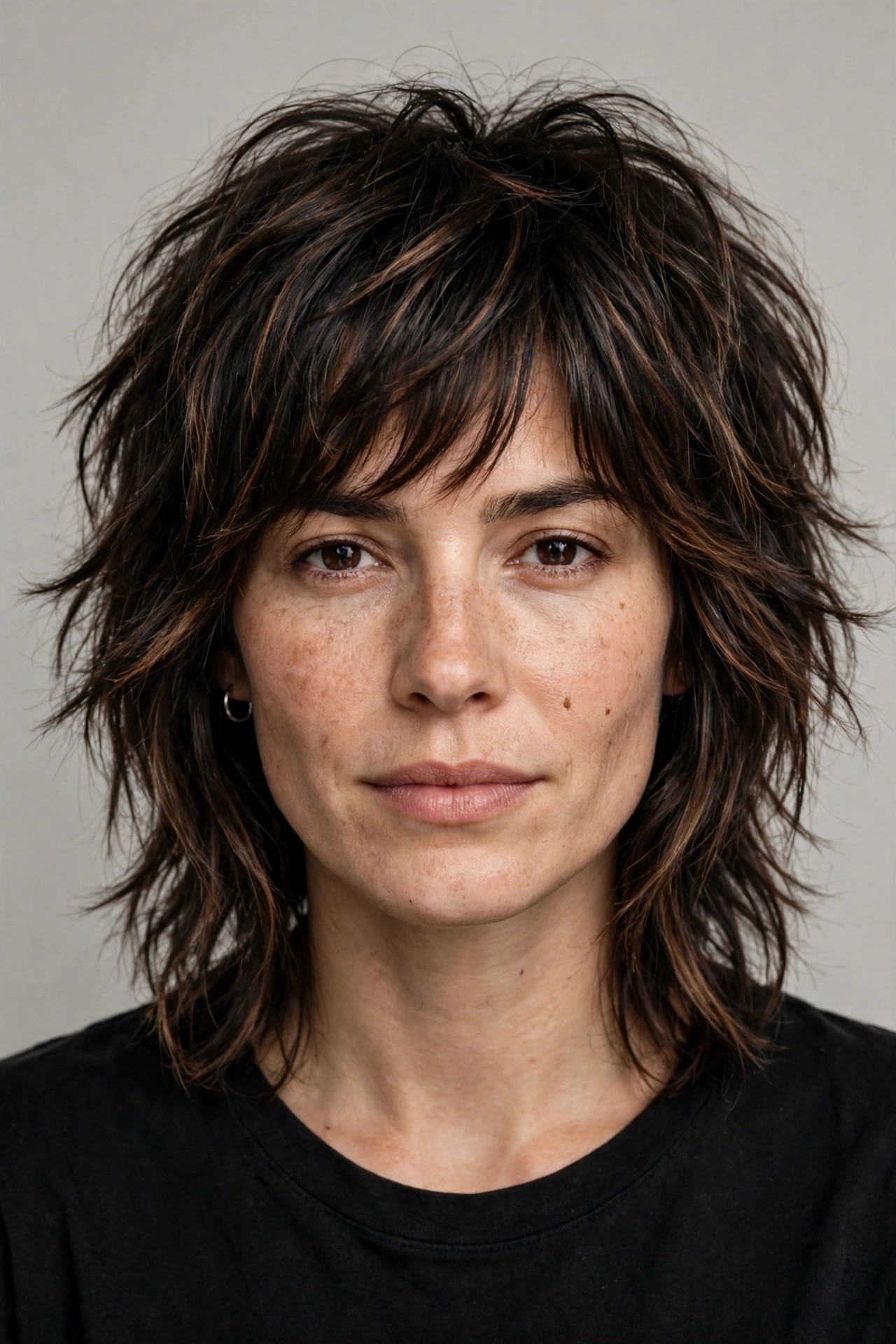
Here’s the physics trick most stylists won’t tell you: bangs make the rest of your hair look thicker. By pulling a section of hair forward into a fringe, you concentrate density at the face — where the eye looks first. A chin-grazing fringe paired with shaggy layers gives fine hair an instant “more hair than you have” effect.
What to ask for: “A shag with a longer, chin-grazing fringe — not micro bangs. Wispy and piecey, blended into the face-framing layers.” Full blunt bangs on fine hair can look sparse; wispy keeps them soft.
Styling: 4 minutes. Bangs need a quick blow-dry (they misbehave if left to air-dry), then the layers need nothing but a scrunch. Keep dry shampoo in your bag — fringe touches skin and picks up oil faster.
Who it suits: High foreheads and long faces — the fringe shortens the face visually. If your hairline is very fine or sparse, go for the curtain version in #1 instead.
6. The Textured Air-Dry Shag
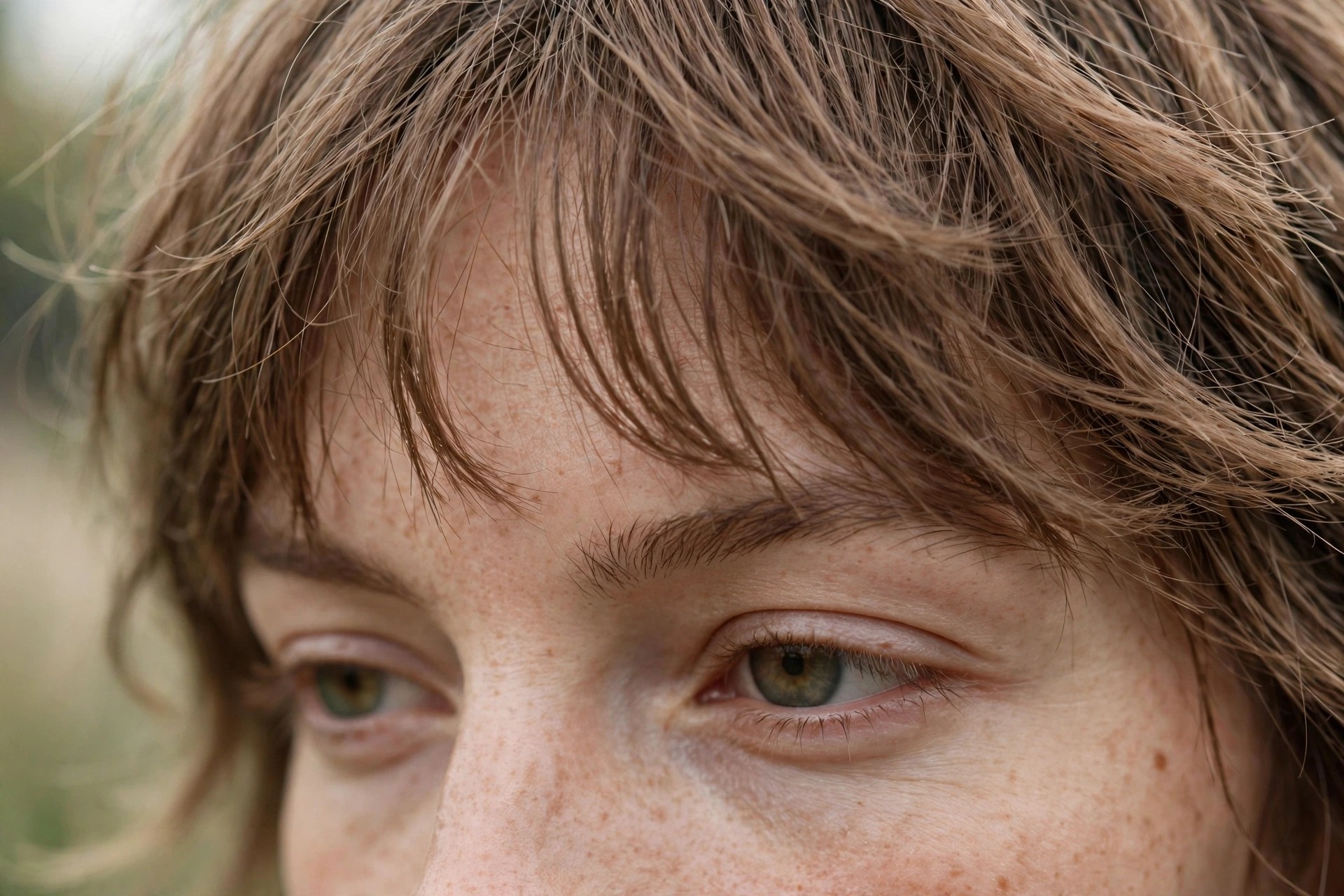
For the wash-and-go crowd: a shag cut specifically for air-drying. The layers are carved longer and softer so natural texture does the work. On fine wavy hair, this is transformative — the cut releases wave patterns that one-length hair suppresses, and waves read as volume even on the finest strands.
What to ask for: “A shag I can air-dry — softer, longer layers, nothing too short on top. Cut it dry or ask how it behaves without heat.” A stylist who cuts for your natural texture, not the blowout, is key here.
Styling: 2 minutes. Salt spray or mousse on damp hair, scrunch, and don’t touch it until it’s dry. Touching wet waves breaks them up into frizz; patience is the whole technique.
Who it suits: Natural waves and loose curls. Pin-straight fine hair can still work — ask for extra texture through the mid-lengths to fake the wave.
7. The Long-Layered Shag Lite
Not ready to chop? The “shag lite” brings shag energy to long hair: face-framing layers starting at the collarbone, soft feathering through the lengths, and a broken-up perimeter. You keep your length, but the cut stops reading as “curtain of thin hair” and starts reading as styled. The face frame does most of the visual work — it draws the eye to the layers, not the ends.
What to ask for: “Long layers with a strong face frame starting at the chin or collarbone, and a feathered — not blunt — perimeter.” Keep the shortest layer no higher than the collarbone if you want to avoid a mullet read.
Styling: 10 minutes for the full blowout, or 3 if you just round-brush the face frame and leave the rest. Braiding damp hair overnight gives the feathered ends a soft wave by morning.
Who it suits: Anyone growing out a shorter cut, or long-hair loyalists whose ends keep looking wispy. Fine hair past the waist should still take some weight out of the ends.
Quick comparison: which shag for your hair?
| Cut | Best length | Daily styling time | Best for |
|---|---|---|---|
| Curtain-Bang Shag | Shoulder | 5 min | Flat crowns, round faces |
| Collarbone Choppy Shag | Collarbone | 7–10 min | Keeping length, long faces |
| Short Flippy Shag | Chin | 3 min | Lowest effort, petite faces |
| Soft Wolf Shag | Medium-long | 5–8 min | Crown collapse, edgy taste |
| Fringe-First Shag | Shoulder | 4 min | High foreheads, face focus |
| Textured Air-Dry Shag | Medium | 2 min | Wash-and-go, natural waves |
| Long-Layered Shag Lite | Long | 3–10 min | Long-hair loyalists |
FAQ
Will a shag make my thin hair look thinner?
Only if it’s cut wrong. A shag built for fine hair uses short crown layers and feathered ends — it builds volume. What thins the look is over-thinning with shears or layers cut too long and sparse. Tell your stylist “no thinning shears” and you’ll be fine.
What should I actually say at the salon?
Bring a photo, point to where you want the shortest layer to sit, and say the words “choppy crown layers” and “feathered ends, no thinning.” Stylists are visual — the photo does more than any description.
How often do shag cuts need trims?
Every 8–10 weeks to keep the layers defined. The good news: shags grow out better than blunt cuts. A shag at week 10 looks intentionally tousled; a grown-out bob just looks grown out.
Can I get a shag if my hair is curly?
Yes — curls and shags are a classic pairing, but the cut must be done dry or on your natural curl pattern. Ask for longer layers than you’d think; curls spring up and shorten everything by an inch or more.
What products actually add body to fine hair?
Mousse at the roots on damp hair (skip heavy creams), a light texturizing spray on dry hair, and dry shampoo at the crown between washes. Fine hair’s enemy is weight — every product should be a mist, foam, or powder, never a butter.
Thin hair doesn’t need more hair — it needs a smarter cut. The shag gives fine strands somewhere to go: up, out, and forward, instead of flat against your head. Pick the version that fits your length and your mornings, bring the photo, and say the words your stylist needs to hear. The body is in the cut.