HAIRCUT IDEAS
Mid-Length 90s Haircut: The Rachel Revival Done Right
The most copied haircut of the 90s is back — but the 2026 Rachel isn’t a costume. Here’s how to wear the mid-length layered legend so it looks expensive and current, not like you time-traveled.
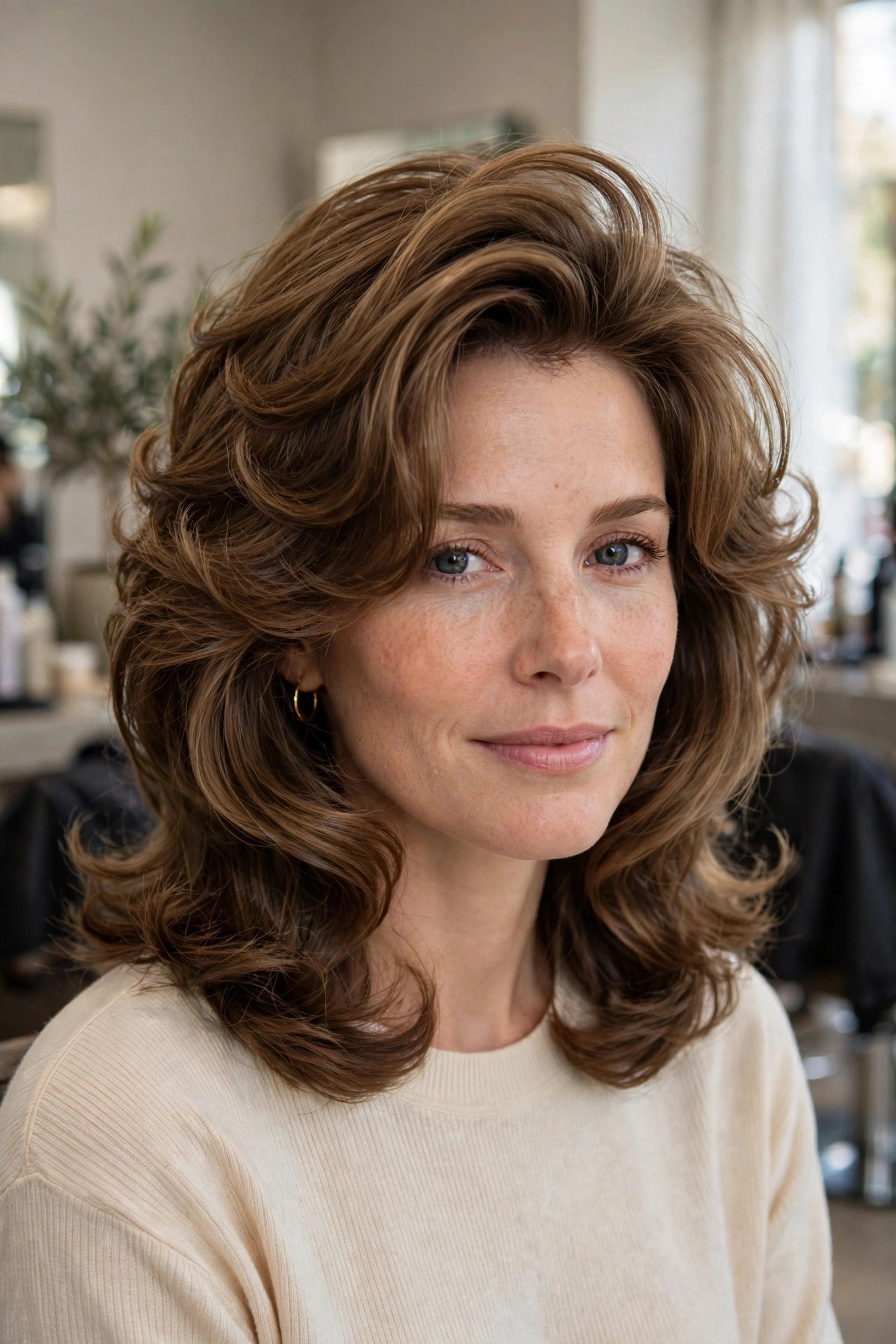
Every decade gets its resurrection moment, and the mid-length 90s layered cut — you know the one, the collarbone-length masterpiece with the flipped-in face framers and the bounce that defied gravity — is having its biggest comeback yet. Scroll Pinterest right now and the evidence is everywhere: long layered boards are filling up with flipped ends, piecey layers, and that unmistakable swingy silhouette.
But here’s the thing nobody tells you: the original 90s Rachel was a product of its era — frosted, feathered, sometimes a little helmet-adjacent. The 2026 version keeps everything that made it iconic (the movement, the face-framing, the main-character bounce) and leaves behind everything that would look dated. This guide shows you exactly where the line is — and how to land on the right side of it.
1. The Authentic Rachel: Know the Blueprint
Before you modernize anything, understand what made the original work. The 90s mid-length cut was built on heavy layering through the front — short pieces starting at the cheekbone that got progressively longer toward the back, with the perimeter hovering right at or above the collarbone. The signature move was the inward flip: ends curving toward the face, which carved out cheekbones and made the hair swing when you moved. Ask your stylist for “collarbone length with graduated face-framing layers starting at the cheekbone, ends flipped under.”
Best for: anyone who wants the full nostalgia hit; medium to thick hair that can hold the flip.
Styling time: 10 minutes — the flip needs a round brush or hot rollers to survive the day.
2. The 2026 Update: Softer, Grown-Out, Middle Part
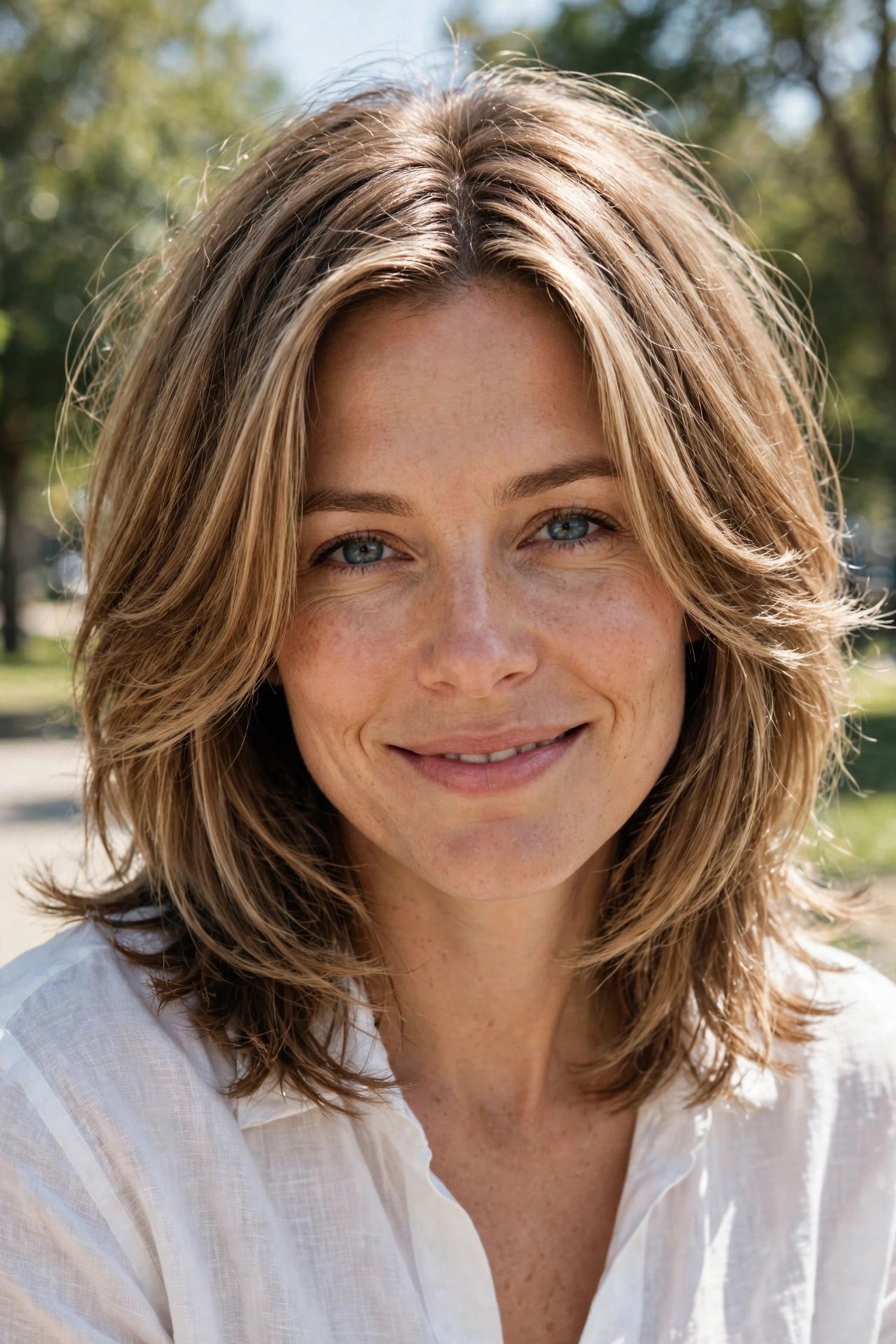
This is the version stylists are actually cutting in 2026, and it’s genius. Same DNA — mid-length, lots of layers, face-framing — but the layers are longer and softer, like the original grown out for six months in the best way. The harsh side flip becomes a middle part with lived-in movement. It reads 90s without quoting it. Tell your stylist: “Rachel-inspired, but modern — soft, disconnected layers, grown-out feel, keep the perimeter solid.” The word “solid” matters: it stops the ends from going wispy, which is what dates most throwback cuts.
Best for: anyone who wants the trend without the costume; straight to wavy hair.
Styling time: 5 minutes — the softer layers air-dry beautifully; the cut does the talking.
3. Curtain Bangs + Rachel: The Power Combo
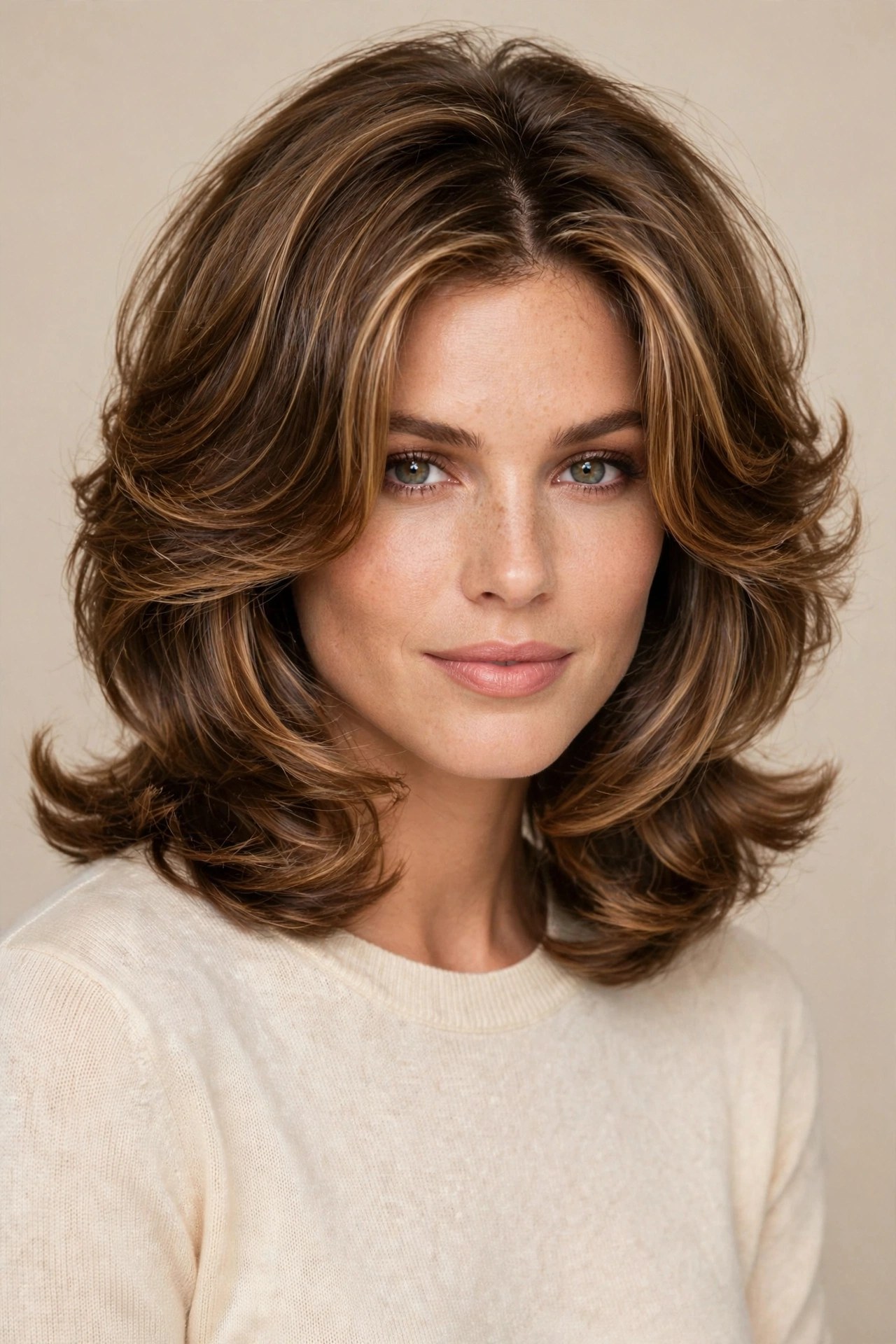
If the Rachel is the 90s’ most famous cut, curtain bangs are the 2020s’ most famous fringe — put them together and you get a cut that belongs to both eras and neither. The curtain bangs melt straight into the face-framing layers, so instead of a harsh line across your forehead you get one continuous swooping frame around your face. Ask for them cut long, ending at the cheekbone — short curtain bangs on this cut veer retro fast, long ones stay editorial. Bonus: this is the most forgiving version of the Rachel if your hair is fine, because the bangs create fullness right where you need it.
Best for: long foreheads, fine hair that needs front fullness, anyone who wants maximum face-framing.
Styling time: 7 minutes — blow-dry the bangs away from the face with a round brush for the signature swoop.
4. The Blowout: How to Get the Bounce (Without a Salon)
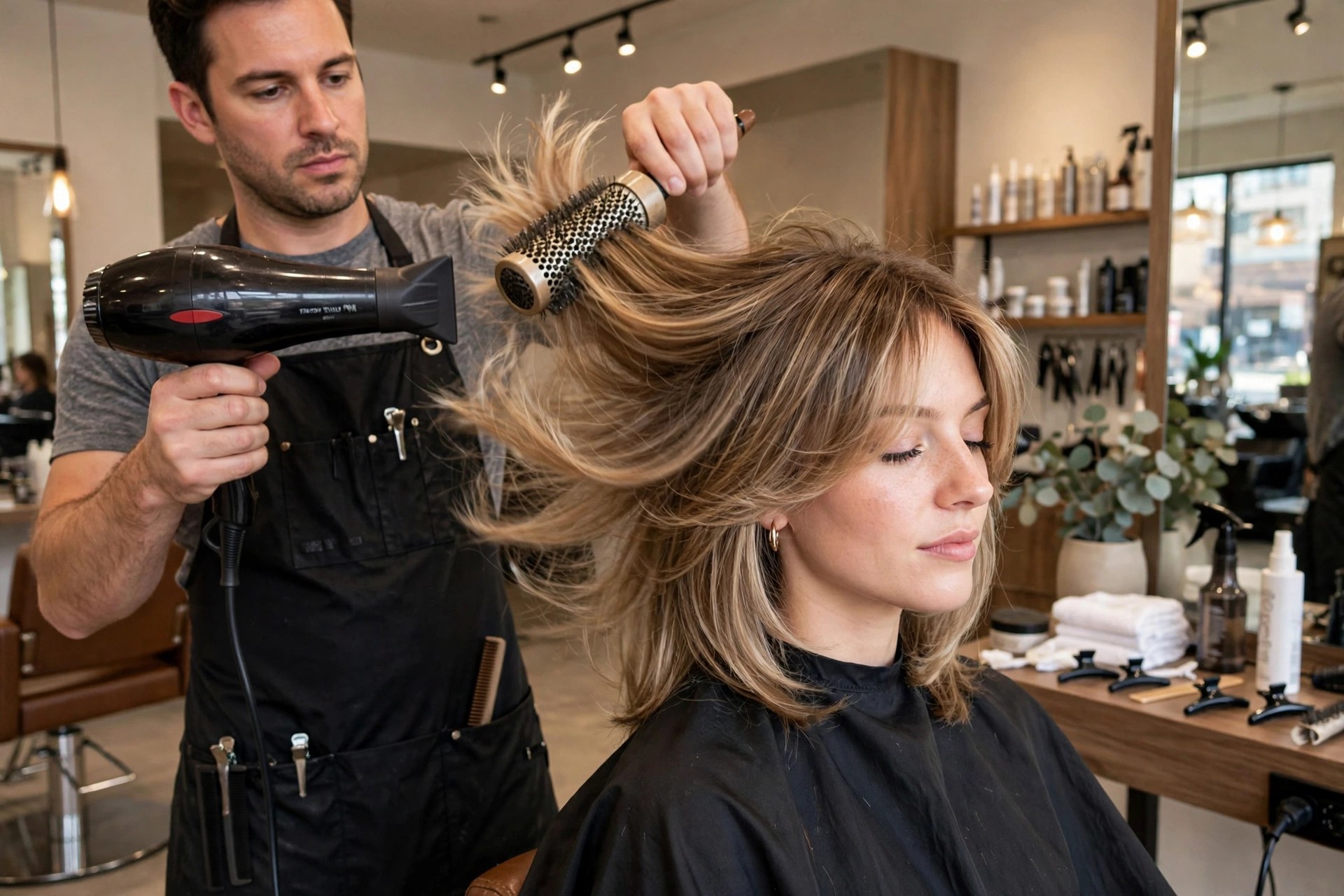
The Rachel without the bounce is just layers — the styling is the haircut. The 90s secret was hot rollers and a round brush; the 2026 shortcut is simpler. On 80%-dry hair, wrap the face-framing sections around a large round brush and pull them inward and under as you dry — that’s the flip. Then, the move nobody did in the 90s: leave the very ends alone and let them break up naturally. Perfectly curled ends look dated; slightly undone ends look expensive. Finish with a pea-sized amount of shine serum only on the mid-lengths — never the roots, or the bounce collapses by noon.
Best for: everyone — this styling method works on every Rachel variation.
Styling time: 10 minutes for the full blowout, 3 minutes if you slept in hot rollers.
5. Fine Hair Rachel: Layers That Fake Thickness
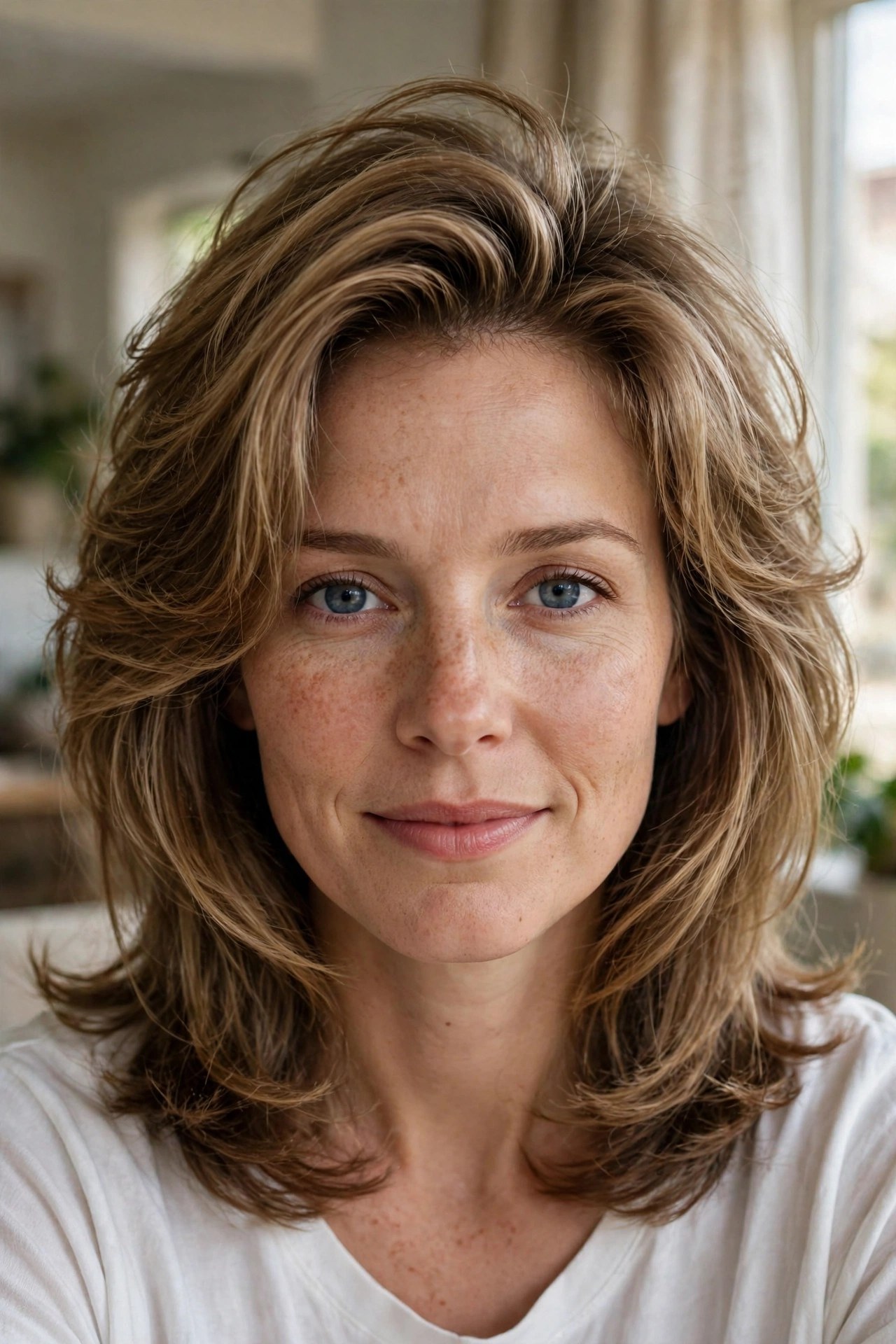
Counterintuitive but true: the Rachel might be the best 90s cut for fine hair, because those short face-framing layers create the illusion of density where hair looks thinnest. The key adjustment: keep the layers longer and fewer than the original — too many short layers on fine hair makes it disappear. Ask for “long Rachel layers, perimeter kept blunt and full, internal layers only through the crown.” And never let a stylist razor your fine hair for this cut — razoring thins the ends and kills the blunt perimeter that makes it look thick. Point-cut only.
Best for: fine or thin hair that needs visible fullness; anyone avoiding the limp look.
Styling time: 6 minutes — root-lifting spray at the crown, flip the head upside down, rough-dry, done.
6. Thick Hair Rachel: Carve Out the Bulk
Thick hair has the opposite problem: the authentic 90s Rachel can turn into a triangle of volume on heavy hair. The fix is all in the technique — your stylist needs to remove weight from underneath with internal layers so the silhouette stays sleek while the surface keeps the flip. Ask for “de-bulked Rachel layers, thinned from the inside, keep the top smooth.” One warning: skip the inward flip on very thick hair and go for a slight outward flick instead — it sits better, lasts longer, and looks intentionally modern rather than accidentally 1994.
Best for: thick, heavy, or coarse hair that puffs out in layered cuts.
Styling time: 12 minutes — a smoothing cream before blow-drying is non-negotiable here.
7. What to Say at the Salon — Your Cheat Sheet
Walk in with this script and walk out with the cut you actually wanted: “Mid-length, collarbone, Rachel-inspired” (names the reference), “face-framing layers starting at the cheekbone” (sets the signature detail), “modern version — soft, grown-out layers, solid perimeter” (stops it going dated), “middle part” (unless you want the side flip), and “long enough to tuck behind my ears” (your insurance policy). Bring three photos of the modern version — the 2026 soft-layer Rachel, not screenshots from a 90s sitcom. Stylists copy what they see, so curate what they see.
Maintenance: trim every 8–10 weeks. The layers grow out into face-framing pieces, so there’s no ugly phase — this is one of the kindest throwback cuts to live with.
Which Rachel Are You? — Quick Comparison
| Authentic 90s | 2026 Modern | Curtain-Bang Combo | |
|---|---|---|---|
| Vibe | Full nostalgia, frosted tips energy | Editorial, expensive, current | Best of both decades |
| Part | Deep side flip | Middle part | Middle part |
| Layer feel | Short, choppy, feathered | Long, soft, grown-out | Soft with a swooping fringe |
| Styling time | 10 min (needs the flip) | 5 min (cut does the work) | 7 min (bangs need attention) |
| Best hair type | Medium-thick, holds a curl | Straight to wavy, any density | Fine hair (bangs add fullness) |
| Dated-risk | High — commitment required | Near zero | Low |
Frequently Asked Questions
Is the Rachel haircut flattering on round faces?
Yes — with one adjustment. The collarbone length and face-framing layers actually slim a round face, but ask for the middle-part 2026 version rather than the side flip. The center part draws the eye vertically and the layers create angles the face doesn’t have on its own. Avoid chin-grazing versions, which widen.
How is this different from a butterfly haircut?
Cousins, not twins. The butterfly cut has dramatically short top layers (chin-length) over long bottom layers — it’s engineered for volume. The Rachel’s layers graduate gradually from cheekbone to collarbone and the perimeter is shorter overall. If you want swingy and face-framing, go Rachel; if you want explosive volume, go butterfly.
Will the Rachel work on curly hair?
Beautifully, but it becomes a different cut — the flip is replaced by curl-by-curl layering that lets each curl sit at its own length. Ask for it cut dry, and know the face-framing layers will spring up shorter than they look wet. The 90s bounce translates perfectly to curl bounce.
How do I keep it from looking dated?
Three rules: middle part over side flip, solid blunt perimeter instead of razored wispy ends, and slightly undone ends rather than perfectly curled-under ones. Any one of these modernizes it; all three together make it fully 2026.
How often does the Rachel need trimming?
Every 8–10 weeks. The layers grow out gracefully into face-framing pieces — there’s no awkward in-between stage — but the signature flip loses its punch once the face-framers pass the collarbone. Book the trim when the bounce stops holding past lunchtime.
The Rachel revival works because it was never really about one haircut — it was about hair that moves. Mid-length, layered, swinging when you turn your head: that’s a look that outlives every decade it borrows from. Pick your version, bring your photos, say the words from the cheat sheet — and enjoy the best hair flip of your life. The 90s called. This time, they’re jealous.