HAIRCUT IDEAS
The Shag Bob Haircut: 14 Ways to Wear It in 2026
Half shag, half bob, all attitude. The shag bob is the haircut that flatters almost everyone — and the version that’s right for you is sitting right below.
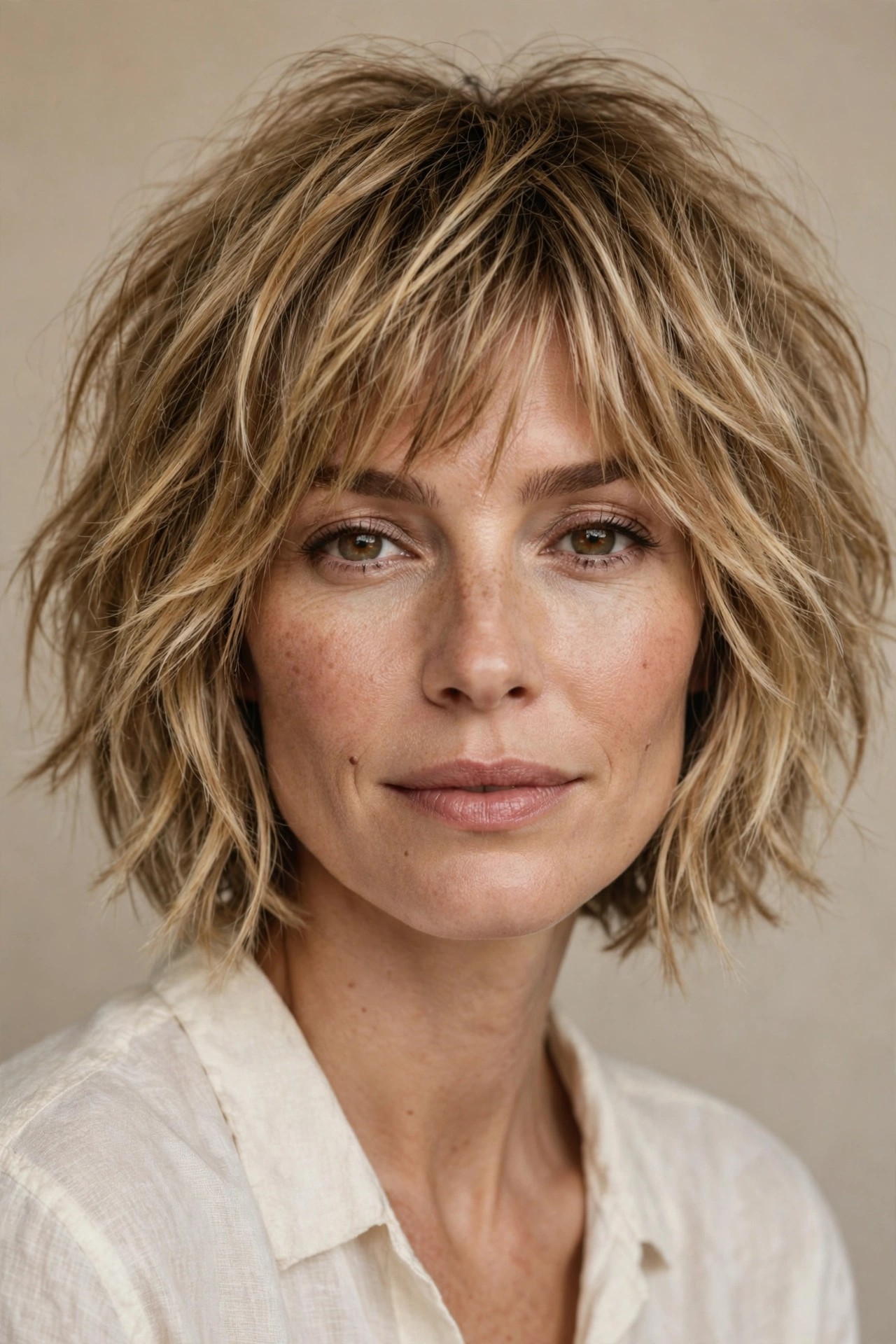
Somewhere between the rock-star shag and the polished bob sits the haircut everyone’s stylist is quietly obsessed with: the shag bob. It’s the choppy layers of a ’70s shag, chopped off at bob length — which means all the movement and personality, minus the months of awkward growing-out.
What makes it genius? It works on nearly every hair type. Thick hair gets de-bulked. Fine hair gets faked volume. Curls get shape. Straight hair gets attitude. And the maintenance is laughably low — this is a haircut that looks better slightly messy.
Below are 14 ways to wear it in 2026, from the softest everyday version to the boldest statement. For each one, I’ll tell you exactly what to ask for at the salon, who it suits best, and how much styling time you’re actually signing up for.
1. The Classic Shag Bob
This is the original: chin-length, heavily layered through the crown and ends, with that piecey, feathered texture that says “I woke up like this.” Ask your stylist for point-cut layers — where the scissors chip into the hair vertically rather than slicing straight across. That technique is the whole trick; it creates the soft, shattered edges the classic shag bob is known for.
Best for: oval and heart-shaped faces, medium-density hair.
Styling time: 5 minutes. A pea-sized blob of texturizing cream, scrunched into damp ends, and you’re done.
2. Shag Bob with Curtain Bangs
Curtain bangs are the shag bob’s soulmate — they melt straight into the face-framing layers so you can’t tell where the bangs end and the cut begins. The secret detail: curtain bangs should be cut dry or nearly dry, because wet hair shrinks and you’ll end up with fringe an inch shorter than you planned.
Best for: longer foreheads and round faces (the center part elongates).
Styling time: 7 minutes — a round brush flicked outward on each side, or a quick pass with a 1-inch flat iron bent away from the face.
3. Shag Bob with a Wispy Fringe

If full bangs feel like a commitment, a wispy fringe is the cheat code. Just a soft veil of feathered hair across the forehead — enough to soften your features, light enough to push aside on lazy days. Ask for the fringe to be razored, not blunted, so it stays see-through and flirty rather than heavy.
Best for: fine to medium hair; anyone who has sworn off bangs before (this is the one that converts people).
Styling time: 3 minutes — blow-dry downward with your fingers, no tools required.
4. The Wolf Bob
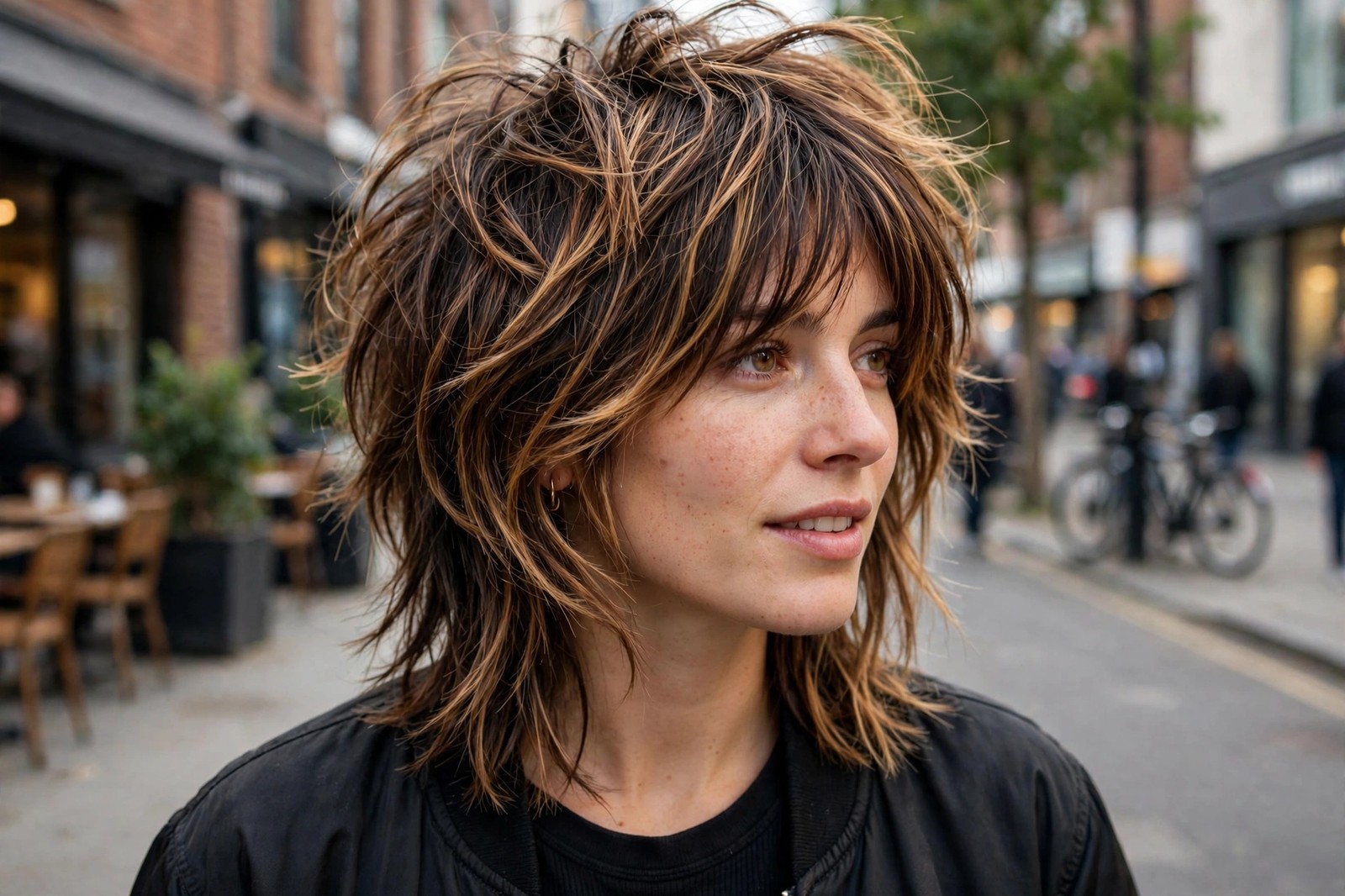
The wolf bob is the shag bob’s wilder cousin: shorter, stacked layers through the crown and a back that tapers longer toward the collarbone. It’s edgier, more dramatic, and the fastest-growing way to wear a shag bob in 2026. Tell your stylist you want “shaggy crown, longer perimeter” — that single sentence prevents the classic mistake of cutting it into a plain round bob.
Best for: thick, wavy hair with natural texture to show off.
Styling time: 6 minutes — diffused with mousse for that lived-in, just-toured-with-a-band texture.
5. The Curly Shag Bob

Curly hair and shag bobs were made for each other — the layers let each curl spring up to its natural length instead of fighting gravity in one heavy triangle. Non-negotiable: the cut must be done on dry curls, cutting curl by curl, because wet curly hair lies and dry curly hair tells the truth.
Best for: 2C to 4A curl patterns that collapse under their own weight in blunt cuts.
Styling time: 10 minutes — curl cream on soaking-wet hair, scrunch, diffuse, and don’t touch it until it’s fully dry.
6. The Beachy Shag Bob

Summer’s answer to the shag bob: tousled, sun-kissed, and styled in about four minutes flat. The move that sells it is a money-piece highlight — two face-framing slices of lighter color that catch the light and make the layers pop. It’s the lowest-maintenance color you can pair with this cut because it grows out like a sunburn, not a line.
Best for: natural wave and anyone who lives in air-dry mode.
Styling time: 4 minutes — salt spray on damp hair, twist two or three random sections, leave.
7. Shag Bob with Face-Framing Layers
Not every shag bob needs bangs. Shorter layers around the cheekbones and jawline frame the face with the same softening effect, minus the grow-out drama. The stylist-level detail: those layers should start at the cheekbone, not the temple — too high and they read as side bangs you’re growing out; at the cheekbone they sculpt.
Best for: square and wide faces (softens the jawline beautifully).
Styling time: 5 minutes — flick the front pieces outward with a flat iron for instant shape.
8. The Color-Melt Shag Bob

Layers and dimensional color are a power couple. A color melt — where one shade dissolves seamlessly into another with no harsh lines — makes every single layer visible. Copper into caramel, espresso into honey, dark brown into auburn: the blend does the work that styling can’t. Ask for balayage painted through the mid-lengths rather than foils, so the light hits the layers at different depths.
Best for: anyone whose shag bob looks “fine but flat” — color is the fix.
Styling time: same as your base cut — the color does the heavy lifting for you.
9. The Sleek-Shag Hybrid
Proof that a shag bob isn’t just a messy-hair haircut: blown out smooth on top with piecey, textured ends, it reads polished in the boardroom and cool at dinner. The hybrid trick is heat-protectant plus a round brush for the crown, then a pea of pomade pinched into just the last inch of hair. Two textures, one haircut.
Best for: straight, fine-to-medium hair; professionals who want edge without chaos.
Styling time: 12 minutes — the only version on this list that asks for real effort, and it’s worth it.
10. The Shag Bob Side Sweep
One part change and your whole haircut transforms. Pushing the shag bob into a deep side part creates instant crown volume and a curtain of layered hair that sweeps across the forehead. No scissors needed — this is a styling-only transformation you can test in ten seconds before your next appointment.
Best for: anyone between trims who wants the cut to feel new again.
Styling time: 2 minutes — part it wet on the side you want, train it with a root clip while it dries.
11. The Mini Shag Bob
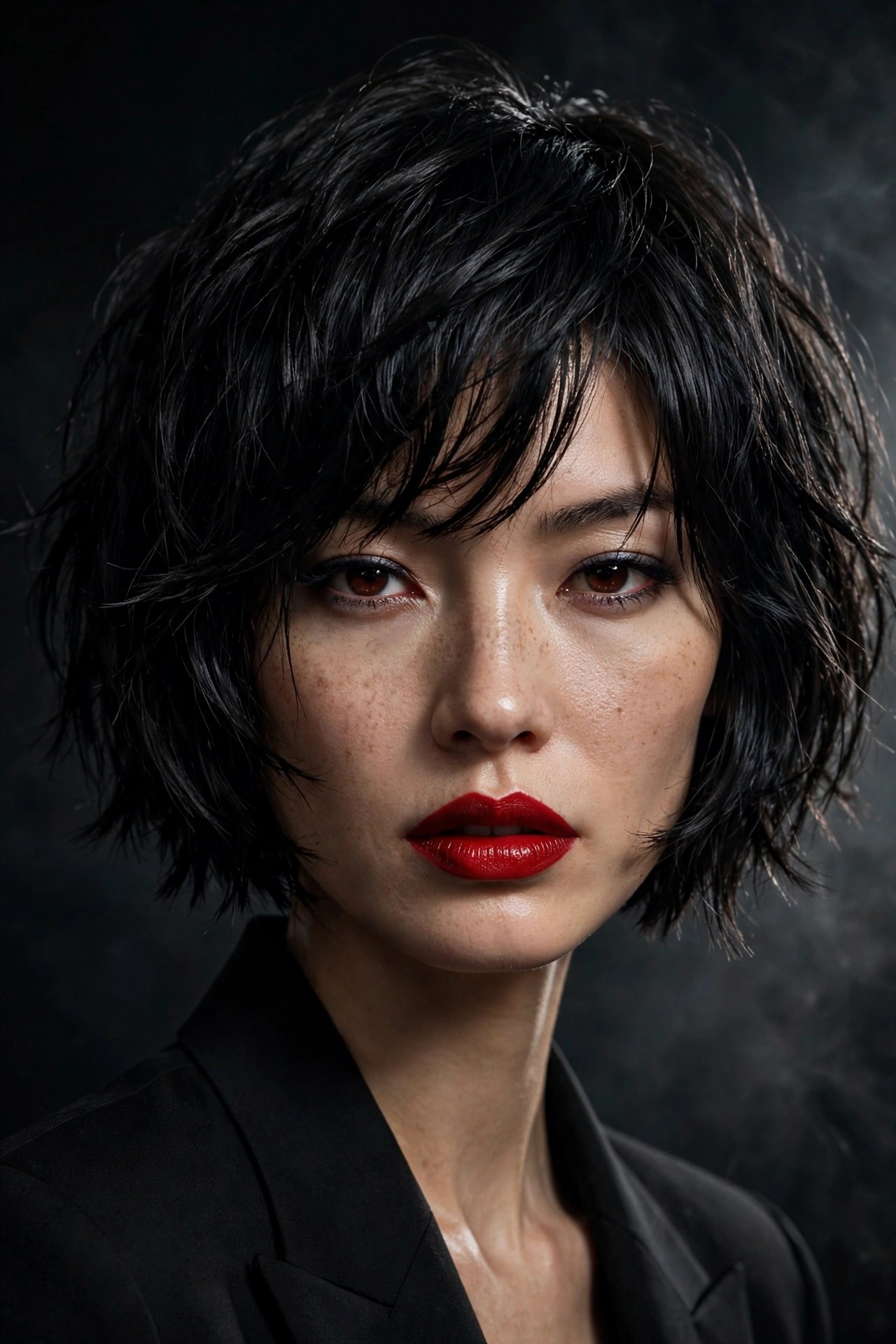
Jaw-length. Bold. Unmissable. The mini shag bob takes all the shag texture and compresses it into a chin-grazing silhouette that shows off your cheekbones like nothing else. Fair warning: at this length the cut shows everything, so trims every 6 weeks are mandatory — a mini shag that grows out becomes a mullet’s cousin.
Best for: confident growers-out of pixies; oval, long, and heart-shaped faces.
Styling time: 5 minutes — texture paste is your best friend at this length.
12. The Thick-Hair Shag Bob
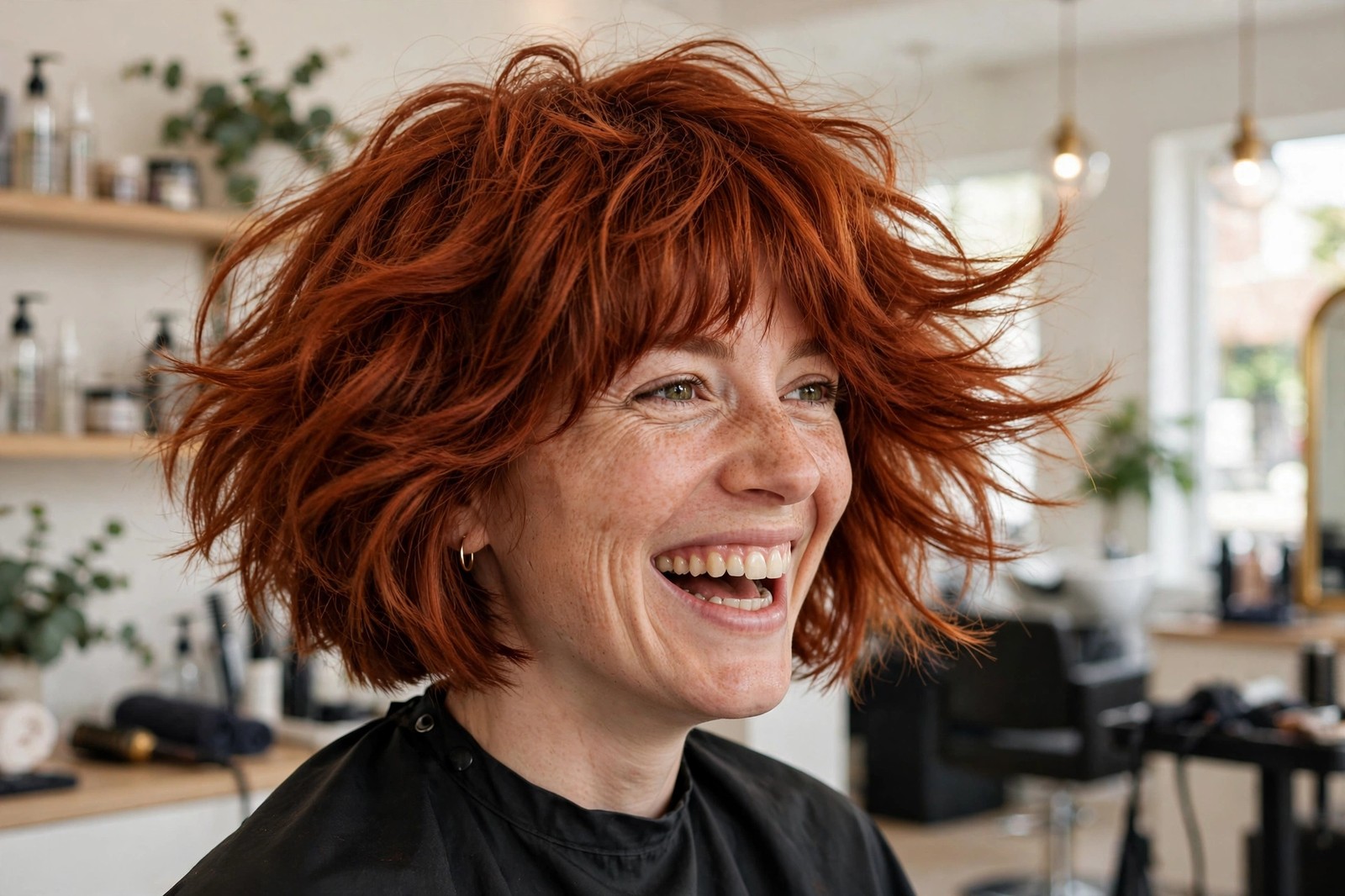
Thick hair in a blunt bob becomes a helmet. Thick hair in a shag bob becomes a waterfall. The layers remove the internal weight that makes thick bobs puff out at the sides, so the hair falls instead of flaring. Ask your stylist for “internal layering and slide-cutting” — those are the de-bulking techniques that thin without frizzing.
Best for: dense, coarse hair that laughs at most bobs.
Styling time: 8 minutes — the cut does the work; you just enhance the swing with a light cream.
13. The Fine-Hair Shag Bob
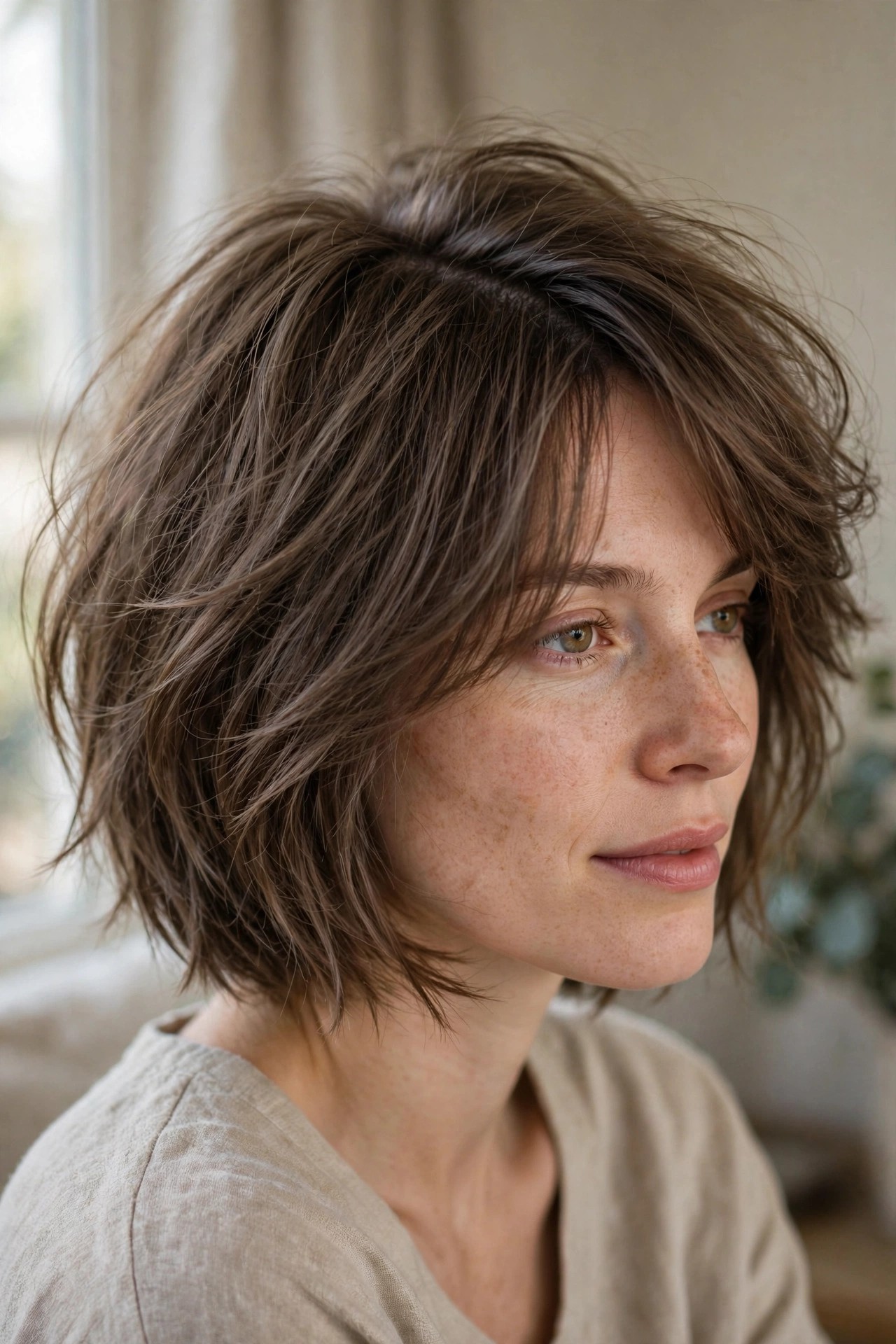
The myth says shag bobs are only for thick hair. The truth: invisible layers — long, blended, barely-there layers — give fine hair airy lift without removing the density you can’t afford to lose. The rule is short layers stay above the chin and the perimeter stays blunt and full. Volume at the crown, weight at the ends.
Best for: fine, thin, or thinning hair that goes limp in one-length cuts.
Styling time: 6 minutes — volumizing mousse at the roots, blow-dry upside down, done.
14. The Lived-In Shag Bob
This is the grown-out, undone version — a shag bob 8 weeks past its appointment, and somehow looking better. The layers have softened, the bangs have merged into the face-framing pieces, and the whole thing has that expensive, unbothered energy. If your stylist cuts your shag bob with soft, diffused lines (no hard edges anywhere), every grow-out phase becomes a look.
Best for: low-maintenance people who’d rather spend money on shoes than salons.
Styling time: 0 minutes. Literally. That’s the point.
Shag Bob vs. Classic Bob vs. Wolf Cut — Which One Is Yours?
| Shag Bob | Classic Bob | Wolf Cut | |
|---|---|---|---|
| Vibe | Cool, textured, undone | Polished, sleek, precise | Edgy, dramatic, wild |
| Length | Chin to collarbone | Chin to jaw | Short crown, long back |
| Best hair type | Nearly all | Straight, fine-medium | Thick, wavy, curly |
| Styling effort | Low — messy is the point | Medium — sleek needs work | Low — texture is the point |
| Grow-out | Graceful, 8–10 weeks | Needs trims every 6 weeks | Awkward without shaping |
| Commitment level | Medium | Low | High |
Frequently Asked Questions
What exactly is a shag bob?
A shag bob combines the choppy, face-framing layers of a ’70s shag with the short length of a bob. It typically sits between the chin and collarbone, with textured ends and lots of movement — the opposite of a sleek, one-length bob.
Does a shag bob work on thin hair?
Yes, with the right technique. Ask for invisible, long-blended layers that keep the perimeter full, and have your stylist keep the shortest layers above the chin. You get crown volume without sacrificing the density thin hair can’t afford to lose.
How often does a shag bob need trimming?
Every 8–10 weeks for most versions — the grow-out is famously graceful. The exception is the mini (jaw-length) shag bob, which needs a trim every 6 weeks to keep its shape.
Can I style a shag bob straight?
Absolutely — that’s the sleek-shag hybrid. Blow the crown smooth with a round brush, then pinch texture paste into the last inch of hair for piecey ends. Two textures, one haircut, completely different vibe.
What should I ask my stylist for?
Bring photos (three is the magic number), and use the magic words: point-cut layers, face-framing pieces starting at the cheekbone, and soft diffused lines with no hard edges. Mention your hair type and how much styling time you’ll actually do — a good stylist will adjust the layering to your real life.
Here’s the bottom line: the shag bob works because it doesn’t fight your hair — it borrows your hair’s natural texture and turns it into the style. Pick the version that matches your hair type, bring your three reference photos to the salon, and walk out with the cut that makes every other haircut look like it’s trying too hard.