HAIRCUT IDEAS
Best Mid-Length Haircuts for Thin Hair That Fake Thickness
The stylist-approved cuts that make fine hair look twice as full — no extensions, no teasing, no tricks you can spot.
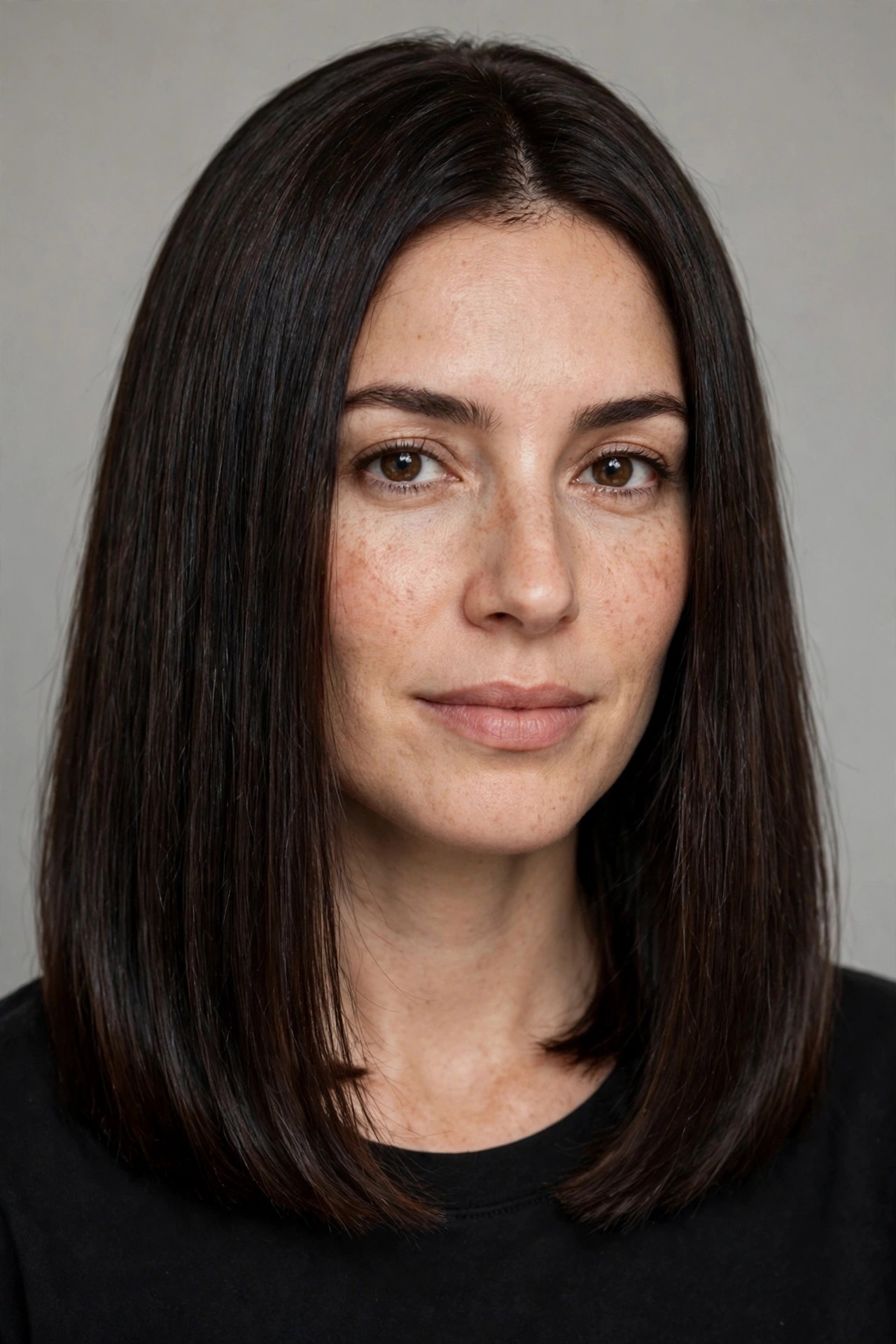
Here’s the open secret of every great salon: thickness is an illusion you can cut into hair. The right mid-length shape — where the weight sits, where the ends land, how the layers fall — can make fine, thin hair look dramatically fuller the second you walk out of the chair. These are the cuts stylists actually reach for when a client sits down and says, “Make it look like I have more hair.”
1. The One-Length Collarbone Cut
This is the heavyweight champion of fullness. A single, blunt perimeter with zero layers means every strand ends at the same line — and that line reads as density. Ask your stylist for a blunt cut that lands right at the collarbone, with the back a whisper shorter than the front. Styling time: five minutes with a round brush or a flat iron bend at the ends. Suits: almost everyone, especially fine straight hair and oval or heart faces.
2. Ends-Only Layers (a.k.a. Ghost Layers)
If you love movement but fear the thinning that layers can cause, ghost layers are your answer. The top six inches stay completely solid; only the last few inches get soft internal texture. The surface looks thick and untouched while the ends move. Ask for “invisible layers through the last three inches only.” Works beautifully on wavy hair, where the ends fall apart into texture without losing the heavy top.
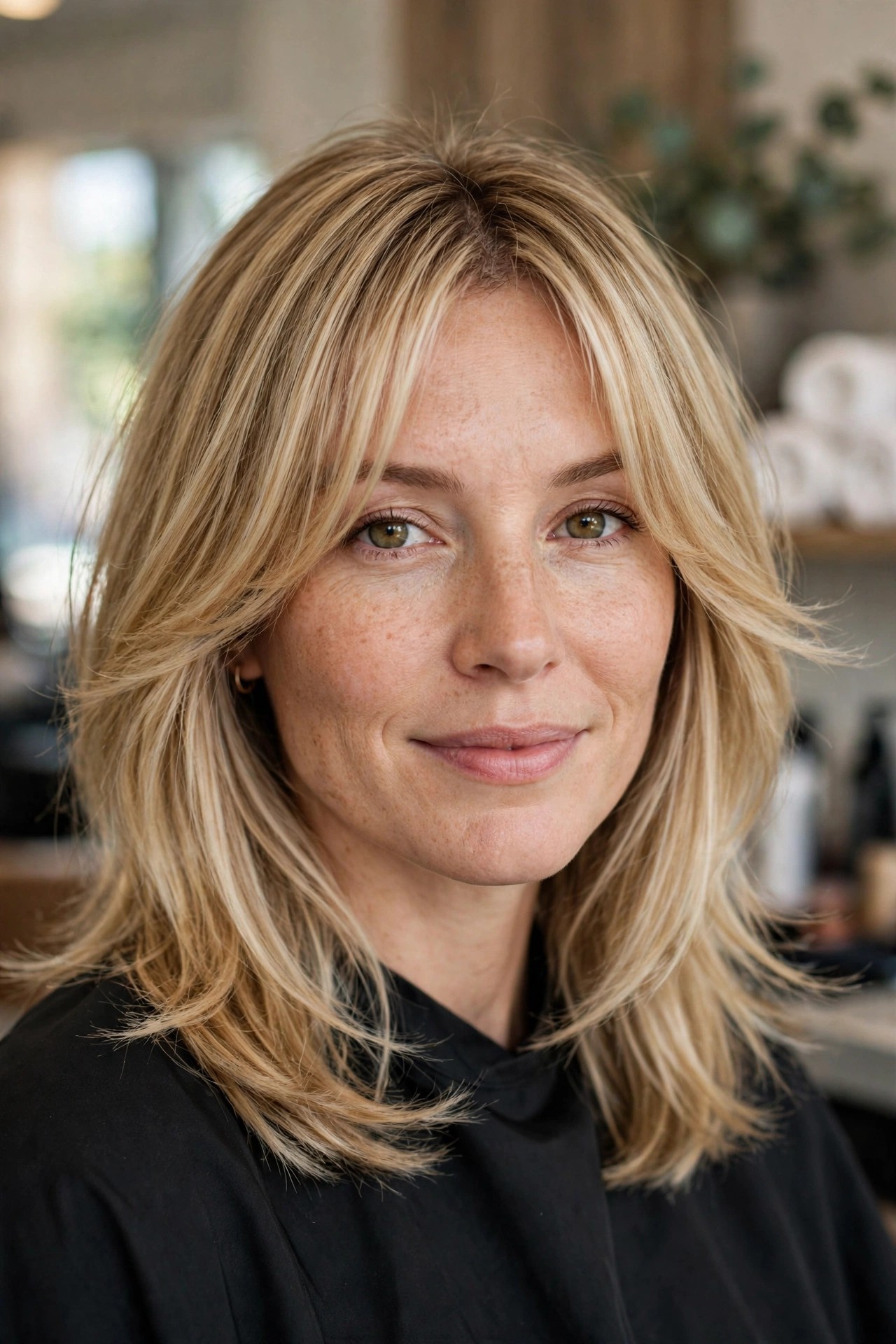
3. The Stacked Midi Lob
Stacking isn’t just for short bobs. A mid-length lob with subtle graduation stacked through the back builds automatic volume at the crown — the cut does the lifting so your hair doesn’t have to. Ask for stacked layers through the back with a longer front that reaches the collarbone. Styling time: ten minutes with a blow dryer flipped at the roots. Best for: straight to slightly wavy hair that falls flat by noon.
4. Curtain Bangs + Face-Framing Pieces
Bangs on thin hair sound scary, but curtain bangs cheat: the center pieces are shorter and the sides melt long, so no real density leaves the haircut. Meanwhile all that movement around your face draws the eye forward and makes the whole head look fuller. Ask for curtain bangs that start at the cheekbones and face-framing pieces that taper to the collarbone. Skip wispy baby bangs — on thin hair they read as sparse.
5. The U-Shape with Hidden Internal Layers
The U-cut keeps the front long and the back slightly rounded, which means maximum weight at the perimeter — the exact opposite of a V-cut that thins everything out. Inside, ask for hidden internal layers (short pieces cut underneath, invisible from the surface) that push the top hair up for lift. From the outside the hair looks one-length and thick; inside there’s a secret scaffolding. Styling time: near zero — air-dry friendly.
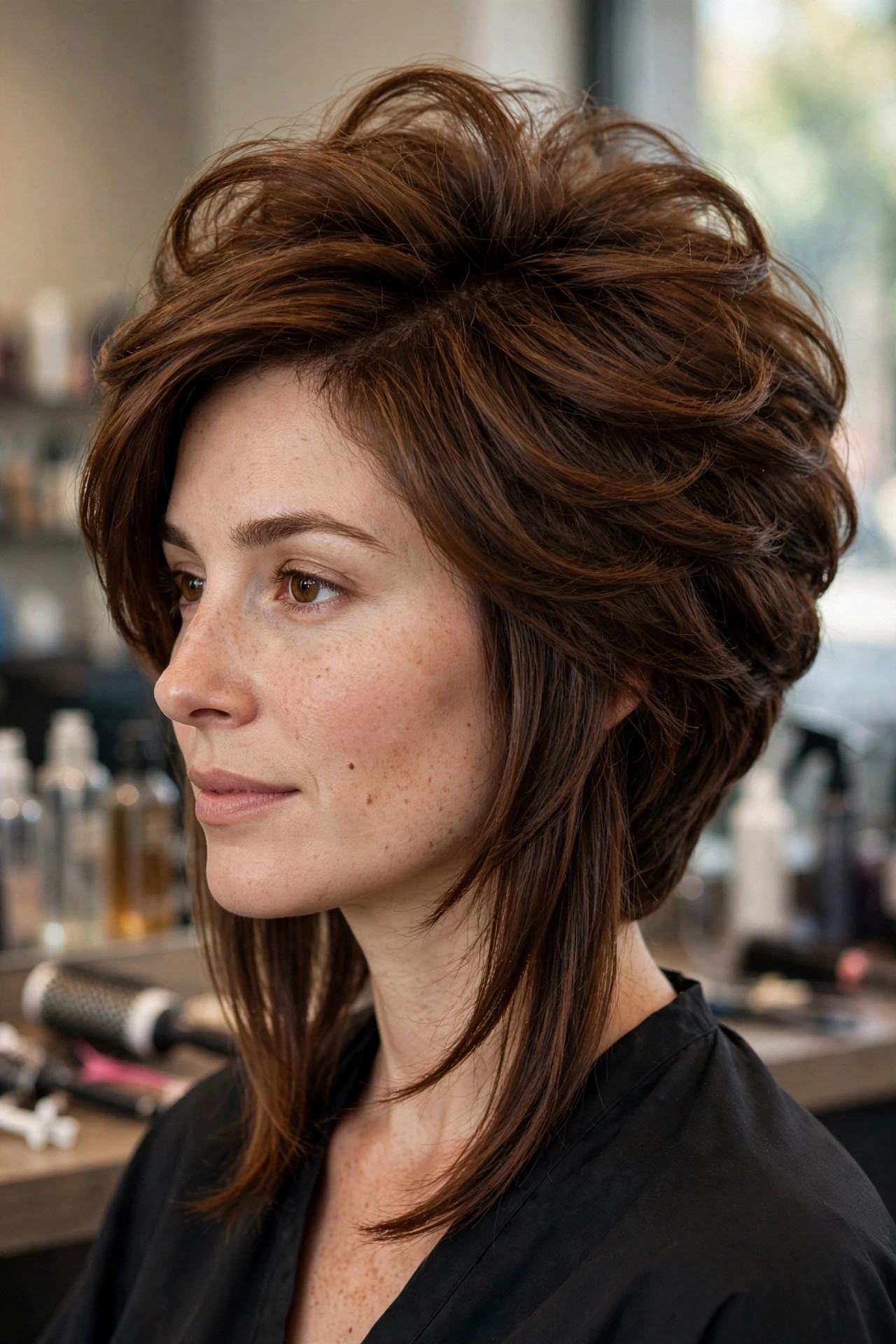
6. Shattered-Ends Texture
Blunt is great, but a perfectly straight line can look severe on very fine hair. Shattered ends — point-cut texture through just the last inch — break up the line so ends look piecey and airy instead of stringy. The key: texture only at the very tips, never up the length. Ask your stylist to “point-cut the last inch for softness.” Ideal for: fine hair with a little natural wave that needs polish without weight removal.
7. The Side-Part Swing Lob
Sometimes the thickness trick isn’t a cut at all — it’s a part. A deep side part forces hair to sweep over itself, stacking strands at the crown and creating instant root lift. Pair it with a collarbone-length lob with long layers and the swing of the part does half the work. Five-second style switch, zero commitment: try the side part for a week before you decide whether you even need a new cut.
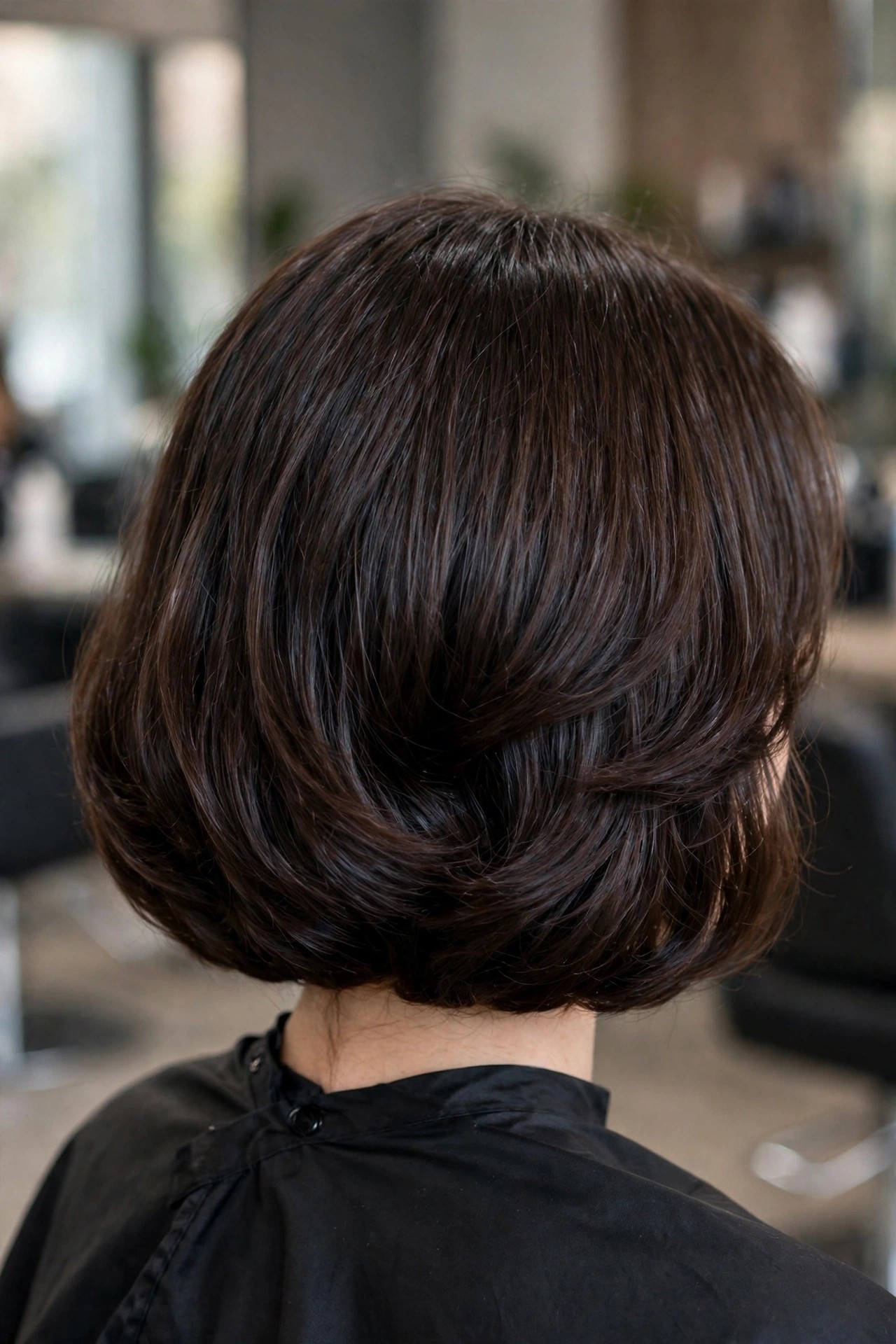
8. 90s Blowout Layers
The big bouncy blowout isn’t reserved for thick hair — in fact, the layer pattern behind it was designed to manufacture volume. Long, rounded layers through the mid-lengths plus face-framers create that flipped, airy movement. The catch: you have to style it. Ask for “long rounded layers with bouncy face-framers,” then commit to a round brush or hot rollers. On second-day hair, a velcro roller at the crown for ten minutes revives the lift.
| Haircut | Daily styling time | Best for | What to ask the stylist |
|---|---|---|---|
| One-length collarbone cut | 5 min | Fine, straight hair | “Blunt, collarbone length, back slightly shorter” |
| Ends-only ghost layers | 5–10 min | Wavy or air-dry hair | “Invisible layers through the last 3 inches only” |
| Stacked midi lob | 10 min | Hair that falls flat | “Subtle stacking through the back, long front” |
| Curtain bangs + framers | 5 min | All thin hair types | “Curtain bangs from the cheekbones, long tapered sides” |
| U-cut, internal layers | ~0 min | Low-maintenance routines | “U-shape perimeter, hidden internal layers” |
| Shattered ends | 5 min | Fine wavy hair | “Point-cut the last inch for softness” |
| Side-part swing lob | 2 min | Anyone, instantly | “Deep side part, long layers” |
| 90s blowout layers | 15 min | Styling-committed | “Long rounded layers, bouncy face-framers” |
FAQ
Won’t layers make my thin hair look even thinner?
Aggressive layers, yes — they remove weight where you need it. But strategic layers (ends-only, internal, or face-framing) add movement without touching the perimeter’s density. The rule: keep the outline heavy, hide the layers inside.
How often should I trim to keep thin hair looking thick?
Every 8–10 weeks. Thin hair shows split, wispy ends faster than thick hair, and ragged ends are the fastest way to lose the illusion of density. A tiny blunt refresh does more for fullness than any product.
Blunt or layered — which is actually better for fine hair?
Blunt wins for maximum thickness; the solid perimeter is unbeatable. But if blunt feels too heavy or severe on you, ends-only layers give you 90% of the fullness with more movement. Avoid heavily layered shags unless the layers are long and the perimeter stays solid.
Do hair color tricks really make hair look thicker?
Yes — dimension is density’s best friend. A root shadow or subtle lowlights add visual depth that reads as fullness, while single-process flat color can make fine hair look even flatter. Ask your colorist for “dimension at the roots, brightness at the ends.”
Can I pull off bangs with thin hair?
Curtain bangs, absolutely — they use minimal hair and frame the face. Avoid straight-across blunt bangs and wispy micro-bangs; both expose sparseness. The test: if your bangs need more than a quarter of your front hair, skip them.
What’s the #1 styling mistake that makes thin hair look thinner?
Over-conditioning the roots. Heavy conditioner or oils at the scalp flatten everything the cut built. Condition mid-lengths to ends only, and use a lightweight root-lifting mousse or spray before blow-drying.
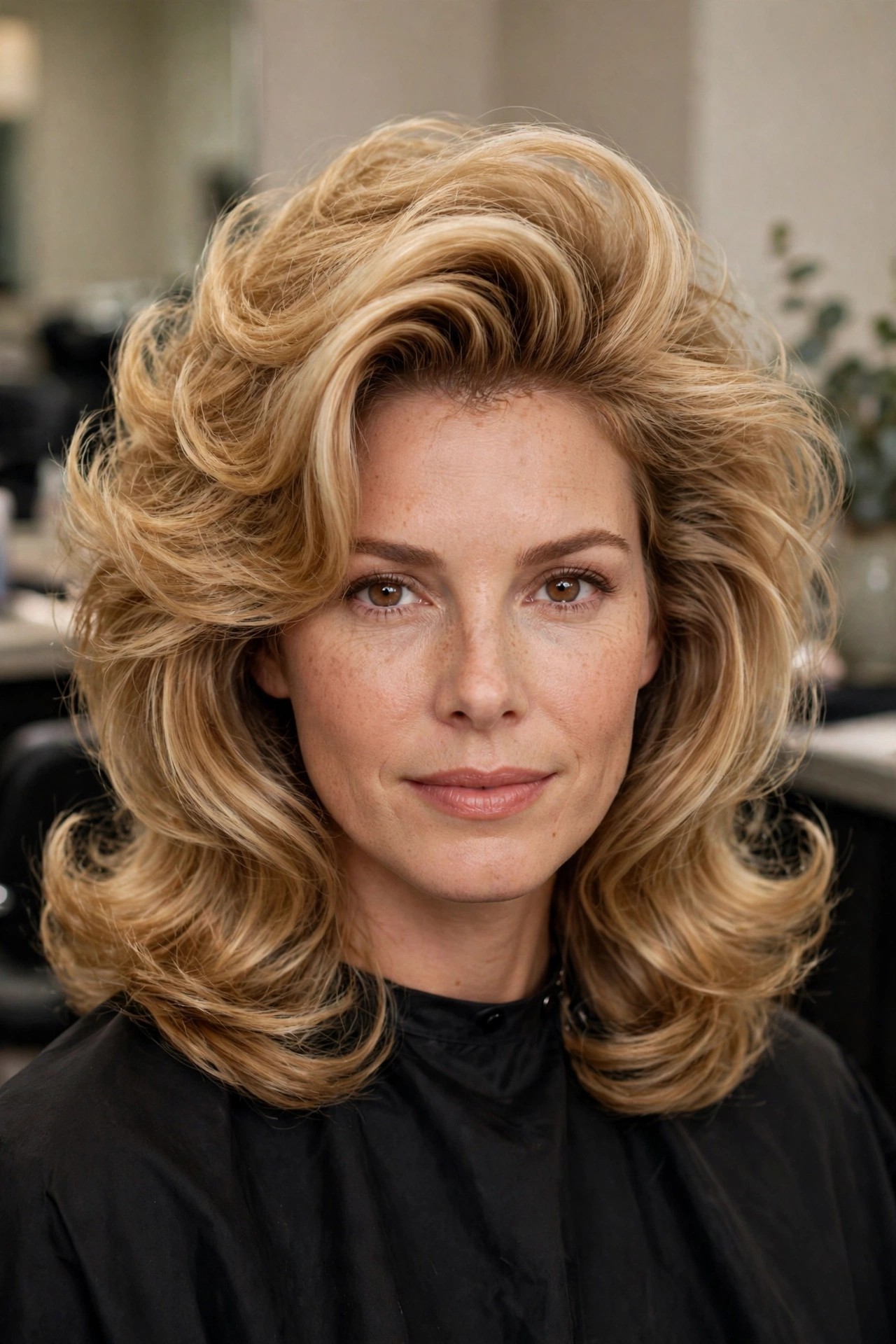
The bottom line: you don’t need more hair — you need a smarter shape. Pick the cut that matches your styling reality (be honest about your ten-minute mornings), keep the perimeter heavy and the ends fresh, and let the cut do the talking. Book the appointment, bring this list, and read those exact “what to ask” lines to your stylist. Full-looking hair is one haircut away.